
Hey travelers, looking for information about Danish Pavilion Venice Biennale 2026? We went to see it, and it's amazing. We have gathered all the information, photographs, and feedback.
Denmark's 2026 entry at the Venice Biennale is not a quiet affair. Artist Maja Malou Lyse, working with curator Chus Martínez, has turned the historic pavilion into something between a fertility clinic, a porn studio, and a biotech laboratory.
In this guide by Venice Insider Guide - Here is everything you need to know about one of the most talked-about national pavilions this year.
Danish Pavilion at the Venice Biennale 2026: what know
The Danish Pavilion 2026 at the 61st International Art Exhibition in the Giardini features Maja Malou Lyse's exhibition titled "Things to Come," curated by Chus Martínez and commissioned by the Danish Arts Foundation.
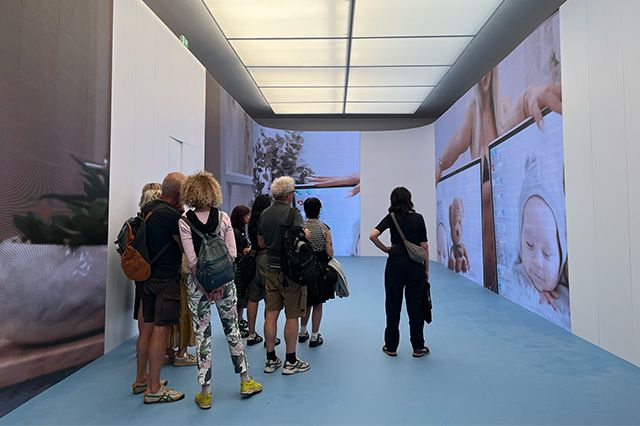
Lyse transforms the Danish Pavilion Venice Biennale 2026 into a fictional fertility clinic and biotech lab to address the contemporary male fertility crisis, using a large-scale video work set in a futuristic sperm bank alongside sculptural installation.
The exhibition explores themes of pornography and reproductive technology through film, sculpture, and installation, examining how late capitalism commodifies sexuality, sperm, and reproduction.
The project dialogues with other national pavilions such as Austria's Seaworld Venice and the overarching Biennale Arte 2026 theme "In Minor Keys," positioning Denmark within wider debates on bodies, gender, and ecology.
Visitors should expect an immersive, confrontational experience rather than a traditional white-cube show, with explicit content and age advisories in place.
Overview: Danish Pavilion Venice Biennale 2026
The Danish Pavilion Biennale 2026 stands in the Giardini alongside dozens of other long-standing national pavilions at La Biennale di Venezia. The 61st Venice Biennale will run from May 9 to November 22, 2026, and the Venice Biennale features 100 national participations in 2026, with seven countries participating for the first time. The Biennale showcases contemporary art from around the world, and Denmark Venice Biennale 2026 representation is among its most provocative entries.
Denmark's contribution centers on artist Maja Malou Lyse, selected to represent Denmark by the Danish Arts Foundation's Committee for Visual Arts, under the curatorial direction of Chus Martínez. The pavilion becomes a speculative space where a fertility clinic, a porn set, and a biotech startup overlap, exposing anxieties about reproduction and demographic futures in the digital age.
The sections below cover historical background, detailed artwork descriptions, thematic analysis, and practical visiting tips.
Denmark Pavilion Venice Biennale 2026 history
The pavilion's history and architecture frame how the 2026 show has come about - and that's a story dating all the way back to almost a century ago.
The Carl Brummer pavilion was built between 1930-32, in a kind of interwar modernism style, with a distinctive yellow facade and a colonnade of columns. Back in 1958-60, architect Peter Koch gave the building a bit of a facelift, adding the Koch Gallery & preserving the outside look.
The pavilion has been part of the Venice Biennale since 1895 - but the Danish pavilion as we know it today has been around since 1932. The Biennale itself has been running for over a century, since 1895, and has had a huge influence on the global art scene. The Danish Arts Foundation is the commissioner, and they select the artists and curators for each show.
So, the Denmark pavilion Venice Biennale 2026 sits pretty much cheek by jowl with the Nordic pavilion and the Central pavilion, so you can't help but notice the neighbouring countries.
Denmark Venice Biennale 2026 - Maja Malou Lyse: A Quick Look at the Artist
Maja Malou Lyse is a Copenhagen-based artist with a bit of a reputation for blending performance, video, and installation with some super explicit (but pretty thought-provoking) investigations of sex and the human body. Born in 1993, she graduated from the Royal Danish Academy of Fine Arts in 2022 & has since exhibited in all sorts of places including ARoS, Kunsthal Charlottenborg, Brandts, Tate Modern, and Moderna Museet.
She's come up with some pretty wacky & thought-provoking works, using cam-girl aesthetics, online porn & feminist theory to ask some pretty fundamental questions about desire under late capitalism. In pieces like Bombshell, Boom! (2024), she uses big screens to turn the tables on voyeurism, and really make the viewer confront a gaze that has some real power behind it. She's even popped up in popular culture, doing a TV show in Denmark called Sex med Maja, and blurring the line between institutional art and mass media.
Lyse often stages herself & performers within constructed sets that are a bit like clinics, studios or domestic spaces - which is pretty much exactly what she's done in Venice. The Biennale is a platform for artists to really make their mark, & Lyse's inclusion shows Denmark's commitment to art that intersects with debates on all sorts of things like reproductive justice, digital culture, and gender.
Danish Pavilion Venice Biennale 2026: Chus Martínez on Curatorial Concept
Curator Chus Martinez is a theorist and curator who's made a name for herself internationally through exhibitions that connect art to ecology, feminism and a whole bunch of futuristic thinking. She's had leadership roles at the Institute for Art, Gender and Nature at FHNW Basel and helped out as an associate curator for TBA21.
The way Chus Martinez approaches the Danish Pavilion for the 2026 Biennale, which is titled "Things to Come", is all about looking at reproduction, sperm and fertility not as these big, sweeping narratives, but as tiny, vulnerable, oftentimes overlooked stories. The title of the exhibition actually references the 1936 sci-fi film 'Things to Come' which was based on H G Wells book about a world which is pretty much in shambles. Chus Martinez is positioning the Denmark Pavilion Venice Biennale 2026 as a kind of thinking tool rather than just a normal exhibition - a place where visitors can wander through scripts about medical protocols, porn production and biotech entrepreneurship.
The Danish Pavilion Venice Biennale 2026 is having a dialogue with the overall theme of the 2026 Biennale "In Minor Keys", which is curated by Koyo Kouoh. This theme is all about understated, vulnerable and listening rather than just spectacle - and its a theme that really resonates with the main idea of the Danish Pavilion that focuses on the between spaces - between reproduction and non-reproduction, between an image and flesh, between life and its potential disappearance.
Denmark Pavilion Venice Biennale 2026 - Exhibition Experience: from Fertility Clinic to Porn Lab
When you enter the Denmark Pavilion Venice Biennale 2026, you immediately find yourself in a room that looks a lot like a fertility clinic - complete with clinical furniture and loads of info about sperm counts and reproductive risk factors. And right away, you start to feel like the language of care and commerce is all getting a bit mixed up.
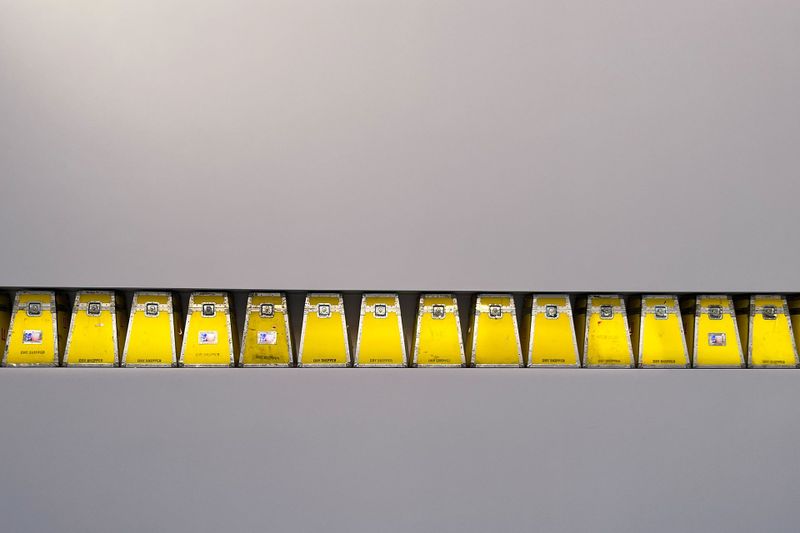
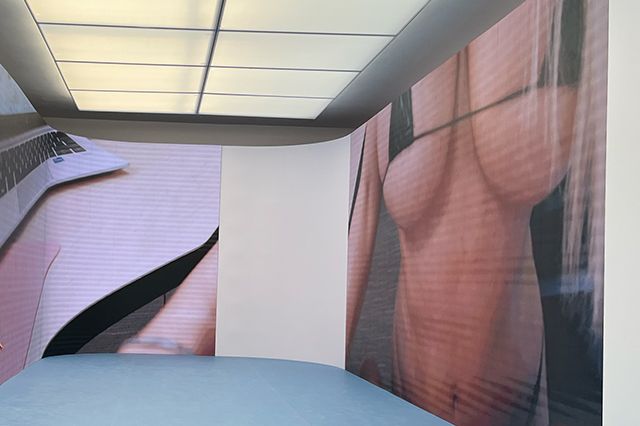
In the Brummer Gallery you'll find a big video work projected inside a cryogenic sperm lab - this was created in collaboration with the art collective DIS and its set in a futuristic sperm bank where porn actors are performing in a kind of stylized laboratory.
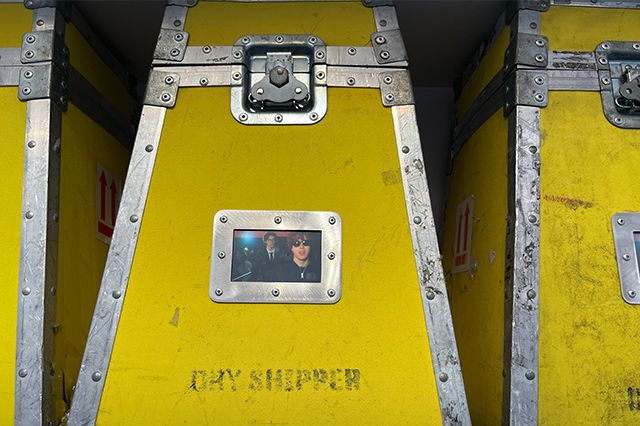
The film imagines a future where pornography and reproductive technology merge, where erotic choreography meets pseudo-scientific procedures like sperm-racing and grading and freezing. The installation itself includes all sorts of lab equipment and fetish props like cryogenic containers, sample cups and refrigerated tanks. Its all a bit unsettling to be honest.
In the Koch Gallery there are sculptural installations that reference fertility rituals and cryogenic storage - there are these kinds of glass cabinets which function as altars, and the sound design is all lab announcements, heartbeat monitors and corporate elevator music - its a really weird and uneasy overlap between clinical anxiety and pornographic theatre.
The building itself was designed in collaboration with Common Accounts, the studio led by Igor Bragado and Miles Gertler, who somehow merged the built environment with the project's whole futuristic vibe.
Danish Pavilion Venice Biennale 2026 - Themes: Fertility Crisis, Late Capitalism, and Gender Politics
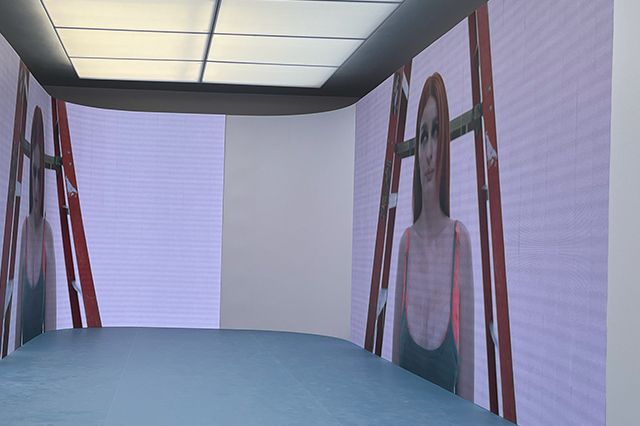
Behind all the imagery of the Danish Pavilion Venice Biennale 2026 there's a whole web of ideas worth exploring.
The main themes of the project - fertility crisis, late capitalism and gender politics - are all connected. The science says that sperm counts have really been dropping in recent years - around 50% since the 1970s, with annual decline rates of about 1.16% to 2.64% depending on the region. But the science is also super contested - some studies say that confirmed fertile men have no clinically significant drop in fertility, so its not clear how much of the fertility crisis is a real thing and how much its just a discourse. The exhibition is really questioning how images influence human reproduction and society - it sees virtual sexual stimuli not just as a representation, but as a potential biological agent.
Chus Martinez and Lyse are also critiquing late capitalism's tendency to commodify everything - sperm banks, fertility apps, biotech start-ups promising optimization. The merging of porn and reproductive technology shows how the gaze of the camera mirrors the gaze of the microscope - and the investor pitch deck. The pavilion is talking about how responsibility for reproduction is unevenly distributed, how masculinity gets shaken by male fertility anxiety, and how non-normative family structures exist on the periphery of mainstream fertility discourse.
Dialogues with Other Pavilions and "Seaworld Venice"
The national pavilions at la Biennale di Venezia 2026 are best understood in relation to each other, and the broader city of Venice - not as isolated shows.
The Austrian Pavilion's "Seaworld Venice", for example, is right next to the Danish Pavilion Venice Biennale 2026 in the Giardini - its a sewage-themed environment that critiques choreographed female bodies and environmental degradation through dance and installation. While Austria is all about waste and water systems, Denmark Pavilion Venice Biennale 2026 is foregrounding semen, clinics and biotech pipelines. Both use the body as a kind of infrastructure - but from different perspectives.
Other pavilions that are exploring the relationship between bodies and ecology are also creating a constellation of voices across the site. Visitors moving between pavilions can start to map out all the connections - bodies as sites of power, vulnerability and capital - which really define the character of the 2026 Biennale across the Giardini and Arsenale.
Architecture and Spatial Design of the Danish Pavilion 2026
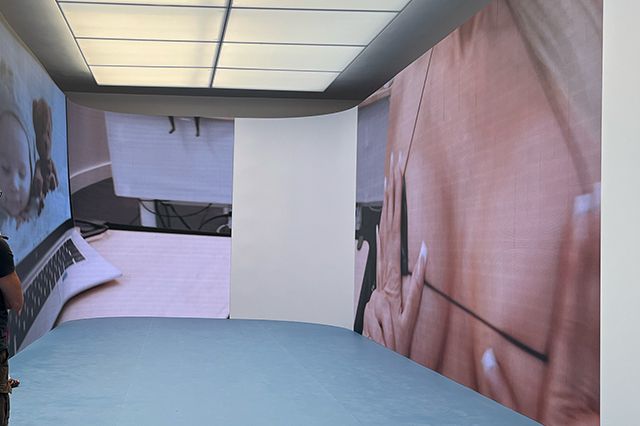
The Danish Pavilion Venice Biennale 2026 itself - Carl Brummer's 1930s neoclassical shell and Peter Koch's modernist addition - becomes a kind of narrative device in 2026. The entry hall is like a public-facing clinic lobby, while the side galleries transform into lab zones and film studios, each with their own lighting and material palettes created by Common Accounts.
Its really quite something.Architectural features like skylights and brickwork are only half seen, because they're hidden behind partitions and curtains - which creates a kind of tension between all our notions of modernist clarity and the messy, visceral stuff that's actually going on.
The way the Denmark Pavilion Venice Biennale 2026 is laid out evokes the way doctors and nurses work, with visitors being funneled through a scripted sequence of corridors and waiting rooms - it's a bit like going to the doctor, in a weird way.
Minor Keys, Common Accounts, and Bigger Picture Conversations
The idea of 'Minor Keys' , taken straight from the Biennale's general theme, gives us a way of reading reproductive and sexual politics through these smaller, more intimate moments rather than always looking for the big, splashy headlines. Stories like low sperm counts and non-reproductive sex - the kind of stuff that gets overlooked in the margins - carry a lot of weight in terms of how we imagine the future of life.
The Danish Pavilion Venice Biennale 2026 just takes this work further into the territory of reproductive science and image culture, by finding more connections between architecture and how we think about keeping our bodies in shape, or controlled, or optimised. Lyse's project is part of a pretty big network of people in Copenhagen, London and beyond - artists, architects, and thinkers all working at the point where science, fiction and real life meet.
Visiting the Danish Pavilion Venice Biennale 2026
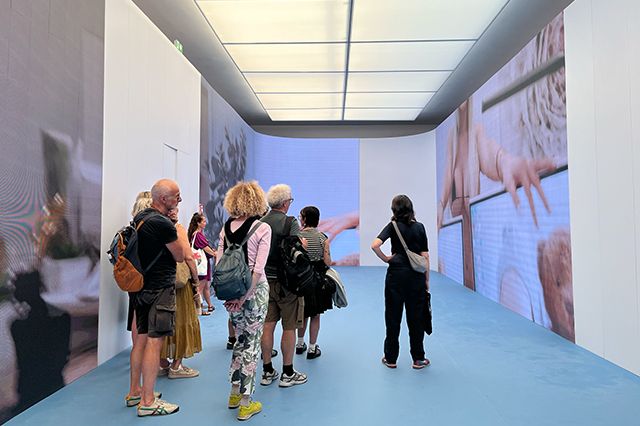
The Danish Pavilion Venice Biennale 2026 is in the Giardini area of Venice - just turn up with a standard Biennale ticket. It's open 11am to 7pm in the summer and 10am to 6pm in the autumn, but you should check the official La Biennale website for exact times because they can change.
You'll need to be 18+ because there's some pretty explicit stuff on show - take about 30-45 minutes to do the main film and the exhibition, and then maybe check out some of the other pavilions while you're there - Austria, Germany, the Nordic pavilion - they all have some interesting things to say about the body, the environment and national identity.
Questions and Answers
Here are some answers to some of the more common questions we get asked.
Who is representing Denmark at the Biennale in 2026?
Denmark Pavilion Venice Biennale 2026 is being represented by the artist Maja Malou Lyse at the Danish Pavilion Venice Biennale 2026, working under the guidance of the curator Chus Martínez. The project was commissioned by the Danish Arts Foundation, developed in collaboration with design outfit Common Accounts and art collective DIS, and was chosen by the Foundation's Visual Arts committee. Lyse was selected to show her exhibition "Things to Come" from May to November 2026.
What's the main idea of the Danish Pavilion 2026?
The Denmark pavilion 2026 is all about looking at the modern fertility crisis - especially low sperm counts and the fact that sperm quality is going down. It uses a fictional fertility clinic, a porn set and a biotech lab as a way of showing how capitalism and technology are changing the way we think about sex, desire and having kids in a world that's completely saturated with images. The exhibition's title comes from H.G. Wells' sci-fi novel about the end of civilisation and the start of a new one.
Can I bring my kids to the Danish Pavilion 2026?
Not really. There's a lot of quite explicit stuff on show - pictures of porn stars, stuff about the porn industry and just general mature themes around fertility and bodily fluids. Educators or parents should take a look at the content guidance at the pavilion entrance and on the official Biennale website before bringing anyone in, especially if they're young.
Conclusion: reviews
Finally, we at Venice Insider Guide can say with certainty that the Danish Pavilion Venice Biennale 2026 is truly thought-provoking and also interesting. In fact, the Venice Biennale quotes the following words regarding the Danish Pavilion at the 2026 Venice Biennale:
"Things to Come takes its title from the 1936 sci-fi film inspired by H. G. Wells’ The Shape of Things to Come. The project asks whether an image could be powerful enough to alter humanity’s fertility potential – and whether pornography might yet rescue the human species. (...) The sperm races draw on an online subculture where young men turn concerns about fertility crisis into spectacular events, featuring matches between internet personalities and rival universities.".
Furthermore, there are two types of rooms in the Denmark pavilion Venice Biennale 2026, as the Biennale also explains:
In the Brummer Gallery, a large-scale video work developed in collaboration with the art collective DIS unfolds like the most improbable fairy tale, featuring legendary porn star Nicolette Shea as a lab researcher at a sperm bank in the year 2045.
In the adjacent gallery, the space is conceived as an eccentric altar dedicated to sperm, structured around two elements: the cryogenic containers used for storage and a new fertility ritual: “sperm races.”
Did you like this post? Keep following us for similar content on Venice Insider Guide.
- The photos in this article about Danish Pavilion Venice Biennale 2026 are the property of Venice Insider Guide.