
Hey dear travellers, if you looking for information about Giardino Mistico (Mystical Garden of the Discalced Carmelites Venice), you're in right place.
Behind one of Venice's grandest baroque churches lies a garden that turns horticulture into a spiritual journey. The Giardino Mistico-the mystical garden of the Discalced Carmelite friars-is a place where every plant, path, and patch of greenery carries religious and symbolic meaning.
Discover Mystical Garden of Carmelitani Scalzi in this complete guide by Venice Insider Guide.
Giardino Mistico: The Mystical Garden of Santa Maria di Nazareth in Venice
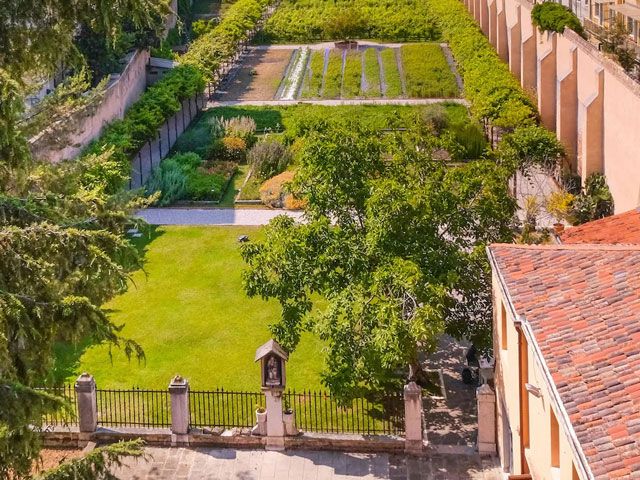
- The Giardino Mistico Venice is an enclosed convent garden located behind the Church of Santa Maria di Nazareth (Chiesa degli Scalzi) in Venice, completed in 2015 after years of neglect and redesigned as a symbolic path inspired by Saint Teresa of Ávila's Interior Castle.
- The mystical garden Venice features seven distinct sections reflecting Saint Teresa's teachings, arranged across fourteen cultivated areas that include one of the oldest vineyards of the Serenissima, medicinal herbs like lemon balm (cultivated since 1710), an orchard of heritage fruit trees, and an olive grove.
- It serves as both a place of silent prayer and a contemporary cultural venue-most recently hosting the Holy See Pavilion at the Venice Biennale 2026, curated by Hans Ulrich Obrist, where the pavilion proposes listening as a contemplative act.
- Guided tours run from April to October by advance booking; access is through the church on the Grand Canal.
- This article about Mystical Garden of the Discalced Carmelites Venice covers history, symbolism, plant varieties, and current events so readers can visit and interpret the mystical garden of the Discalced Carmelites.
Origins of the Giardino Mistico Venezia
Step off the vaporetto at Venice Santa Lucia station, cross the street, and you face the ornate façade of Santa Maria di Nazareth-known as Chiesa degli Scalzi-fronting the Grand Canal. Behind its walls, hidden from the city's bustle, lies one of the most significant monastic green spaces in the Venetian lagoon.
The Discalced Carmelite friars arrived in Venice in the early 17th century, acquiring property for church and convent around 1633. The church itself, designed by Baldassarre Longhena with a façade completed by Giuseppe Sardi, was consecrated in 1705. Its convent brolo-the traditional walled agricultural garden-served practical monastic life: vegetables, vines, and medicinal herbs grew within high walls that protected both crops and silence.
A Giardino Mistico in Venezia, at its core, is an enclosed green space with spiritual meanings, a notion rooted in medieval and Renaissance traditions and drawing from the biblical Garden of Eden. The Christian hortus conclusus symbolizes purity and represents an inner soul. Gardens like these can act as sanctuaries that provide refuge from modern life's chaos.
Over centuries, urban development-especially the 19th-century expansion of the railway station-reduced the garden's footprint. The modern restoration, completed in 2015, transformed the historic brolo into today's Giardino Mistico, keeping agricultural use but overlaying it with an explicit symbolic reading. The orto degli Scalzi became something far greater: a physical map of the soul's spiritual journey.
Mystical Garden of Carmelitani Scalzi: Saint Teresa of Ávila and the Symbolic "Interior Castle"
Saint Teresa of Ávila was born in 1515 in Spain. She founded the Convento de San José in 1562, launching a reform movement that established over thirty convents across Spain and beyond. She was canonized in 1622 and declared a Doctor of the Church in 1970-one of the first women to receive that title.
Teresa wrote Interior Castle in 1577 (published in 1588), describing the soul as a castle of crystal containing seven mansions. Each mansion represents a stage of growth toward union with God: from initial self-knowledge through purification, illumination, and finally the central chamber where the soul can reach God. In her writings, enclosed gardens serve as metaphors for spiritual life and personal transformation. She compared watering a garden to nurturing one's interior life through prayer and discipline. In literature broadly, mystical gardens symbolize deep psychological and spiritual journeys-and Teresa's text remains the most vivid example.
The Giardino Mistico in Venice is intentionally structured as a spatial translation of her Interior Castle. The spiritual journey outlined across seven garden beds lets visitors physically walk what Teresa described on the page. The garden also honors the broader Carmelite mystical tradition, including Saint John of the Cross, whose symbolism-the pomegranate as sign of spousal love-appears in specific plants.
The Seven "Mansions": Layout and Symbolism of the Mystical Garden in Venice
The Giardino Mistico is divided into seven distinct sections, each corresponding to one mansion and to a particular group of plants rich in iconographic and religious meaning. Flora in a Giardino Mistico carries symbolic meaning; each plant can represent virtues or spiritual stages. Mystical gardens often feature winding pathways that encourage exploration, and this one is no exception.
- Green Lawn: The first section symbolizes fullness and conversation with God-a simple, open space inviting visitors to slow down.
- Medicinal Herb Garden: The second section contains medicinal herbs for body purification-lemon balm, sage, mint, and roughly 33 officinal species. The garden includes a dedicated flower bed for medicinal herbs historically tied to monastic healing.
- Trinity Garden: An orderly food garden with threefold patterns in beds, symbolizing the Trinity-Father, Son, and Holy Spirit-nourishing the soul as seasonal vegetables feed the body.
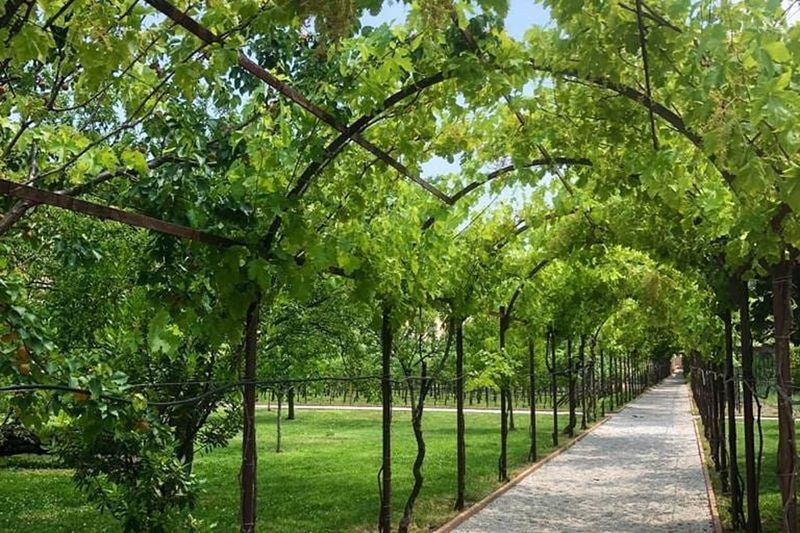
- Vineyard: Seventeen vine rows symbolizing the seven sacraments and ten commandments. This section preserves some of the oldest vineyards associated with Venice and its lagoon, with roughly 20 autochthonous grape varieties maintained in collaboration with Consorzio Vini Venezia.
- Orchard of Lost Flavors: Heritage fruit trees-figs, pomegranates, ancient apple and pear varieties-about 40 old cultivars recovering biodiversity and evoking divine generosity.
- Olive Grove: Thirteen olive trees (Christ and the Apostles) evoke friendship, anointing, peace, and Christ's Passion in Gethsemane. Mystical gardens utilize enchanting lighting to create an otherworldly atmosphere, and evening light through the silvery olive foliage here is especially contemplative.
- Forest: A denser, shadowed zone-the forest symbolizes the chaotic world outside the castle through which the soul must pass.
At the composition's heart stands a central pomegranate tree. The pomegranate symbolizes spousal love and Christ's Resurrection, per Saint John of the Cross. Visitors physically orbit this tree as they move through the garden, approaching a central chamber of meaning. Water features in the garden add tranquility and a calming auditory layer. The design includes lush, layered vegetation for depth, making the mystic garden a microcosm representing the universe. The concept of the Mystical Garden of Carmelitani Scalzi remains relevant in contemporary art and design-as the Biennale proves.
Giardino Mistico and the Holy See Pavilion at the Venice Biennale
The Giardino Mistico has become a venue for contemporary art. The Holy See Pavilion at the Venice Biennale 2026-titled "The Ear Is The Eye Of The Soul"-occupies two sites: the Mystical Garden Venice Biennale and a second venue in Castello functioning as a contemporary scriptorium and living archive.
Curator Hans Ulrich Obrist, working with Ben Vickers, designed an experience where listening replaces looking. Visitors receive headphones and a map, encountering sound works that blend with wind, birdsong, and silence as they walk through the garden. Artists include Brian Eno, Patti Smith, Suzanne Ciani, Soundwalk Collective, FKA Twigs, Meredith Monk, Alexander Kluge, and Ilda David. Soundwalk Collective translates plant bioelectrical impulses into evolving soundscapes-the garden's living plants become instruments.
The pavilion slows the pace of the Biennale. From crowded exhibition halls, visitors enter sheltered greenery where the Holy See encourages stillness and a different relationship with art, time, and nature. The second site in Castello expands this through texts, artist books, and architectural interventions by Tatiana Bilbao. Inspired by Saint Hildegard of Bingen, the entire project treats the ear as a greater treasure than the eye-an invitation to deep listening. The pavilion runs May through November, offering access until late October.
Visiting the Mystical Garden of the Discalced Carmelites Venice: Access, Tours, and Practical Tips
The Giardino Mistico is not a public park. It spans approximately 5,000 square meters of monastic life, accessible mainly via guided tours.
Detail - Information of the Mystical Garden of the Discalced Carmelites Venice:
- Season: April–October
- Booking: Advance reservation required via email
- Cost ~€7 per person (or voluntary donation)
- Access: Through the church of Santa Maria di Nazareth on the Grand Canal
- Languages: Primarily Italian; occasional English
- Behaviour: Silence required; stay on marked paths
Morning visits offer the best light for photography and the quietest atmosphere. Combine the garden with the church's baroque interiors and the surrounding Cannaregio district. During the 2026 Biennale, special access is available through CoopCulture reservations.
FAQ
Is the Giardino Mistico open every day to the general public?
No. The Mystical Garden of Carmelitani Scalzi is not open for unrestricted daily access. Visits are possible only on scheduled guided tours organized by the Discalced Carmelite friars or partner associations, typically between April and October.
Do I need to pay to visit the Mystical Garden in Venice of the Discalced Carmelites?
In some periods visits involve voluntary donations; at other times a small ticket (~€7) is requested to support garden maintenance. Check the official site before planning your visit.
Can I visit the garden independently without a guide?
Except during specific events such as the Venice Biennale or parish open days, visitors must join a guided group to preserve the contemplative atmosphere of the monastic enclosure.
Is photography allowed inside the Giardino Mistico?
Discreet photography for personal use is generally tolerated. Flash, drones, and intrusive equipment are prohibited. Always ask your guide at the start and avoid photographing friars or private areas without consent.
How does the Mystical Garden relate to other religious sites in Venice?
The Mystical Garden of Carmelitani Scalzi forms part of a wider network of spiritual and artistic sites in the city. Along with other monastic gardens, churches linked to Saint Teresa, and the Holy See Pavilion's two sites across Venice, it offers a contemplative dimension far removed from the city's more touristic routes-a sanctuary of history, faith, and living greenery.
Conclusion
In conclusion, the Giardino Mistico (Mystical Garden of the Discalced Carmelites Venice) - an enchanting little convent garden tucked away behind Venice's Church of Santa Maria di Nazareth (Chiesa degli Scalzi) , a real gem that was finally restored to its former glory in 2015 after years of being left to decline. It's a beautiful, contemplative space which draws inspiration from Saint Teresa of Ávila's classic text "Interior Castle" - essentially a symbolic path to help you navigate the deeper things in life.
As well as being a serene place for some quiet time in prayer, the Giardino Mistico in Venice is also open to the arts - it's hosted events such as the Holy See Pavilion at the Venice Biennale 2026, for example, where curator Hans Ulrich Obrist encouraged visitors to take some time to just... listen - a really interesting approach to experiencing art and getting some inner reflection going.
Guided tours normally run April to October, so if you're visiting at that time of year, just get in touch to book in advance - and don't forget to come in through the church on the Grand Canal.
So, the tips? Visit Mystical Garden Venice Biennale!
Follow us www.veniceinsiderguide.com for similar contents!