
Hey travelers, looking for information and photo about Greek Pavilion Venice Biennale 2026? In this guide by Venice Insider Guide you discover everything you need to know.
The Greek Pavilion Biennale 2026 at the 61st International Art Exhibition opens on May 9, 2026, in the Giardini della Biennale in Venice. Artist andreas angelidakis presents Escape Room, an immersive installation that recasts the 1934 building as a space where visitors confront competing versions of truth, history, and identity. The pavilion will remain open through November 22, 2026.
Let's find out in this post from Venice Insider Guide on Greek Pavilion Biennale 2026.
Overview of the Greek Pavilion at Venice Biennale 2026
Greece's pavilion 2026 stands among roughly 100 national participations in Biennale Arte 2026: 29 in the Giardini, 25 at the Arsenale, and 46 across the city. This edition, titled In Minor Keys and conceived by the late curator Koyo Kouoh, prioritizes alternative narratives and non-dominant voices. The greek pavilion responds by interrogating how architecture, media, and nationalism construct reality.
- What: Andreas Angelidakis - Escape Room
- Where: Greek Pavilion, Giardini della Biennale, Venice
- When: May 9 – November 22, 2026
- Curator: George Bekirakis
- Commissioner: MOMus (metropolitan organisation of Museums of Visual Arts of Thessaloniki)

Greece Pavilion 2026: Andreas Angelidakis and 'Escape Room'
Andreas Angelidakis is a man of many talents - both architect and artist - with a keen ability to blend digital simulations with social commentary. He conceived 'Escape Room' specifically with the Greek pavilion 2026 in mind and it's been announced as Greece's official entry for the Venice art Biennale 2026, curated by George Bekirakis with MOMus backing the project as national commissioner.
The exhibition actually bears the title 'Escape Room', but you won't find yourself facing locked doors, countdown timers or puzzles to sift through. Instead, visitors find a mirror rather than an exit - a compelling metaphor for digital illusions and cultural memory.
So, the artwork operates as a building that tries to convey multiple conflicting histories all at once.
Greek Pavilion Venice Biennale 2026: review
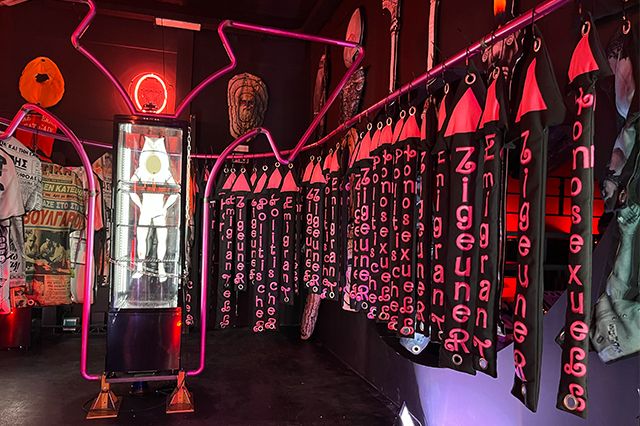
The Greek Pavilion Venice Biennale 2026 is absolutely one of the most beautiful, interesting -. In fact, at any moment you enter inside, you always find a lot of people. That's because it seems to be one of the most popular and talked about. But why this year? We saw with our own eyes a room full of colors, vivacity and a great desire to guess.
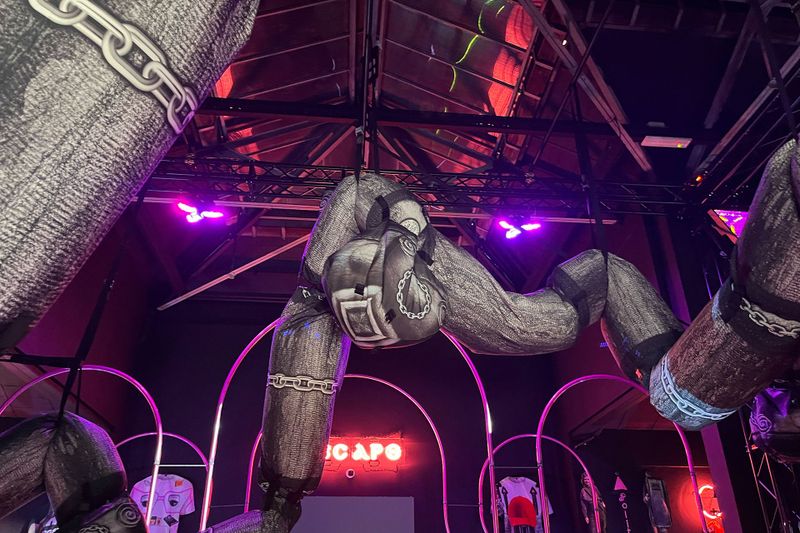
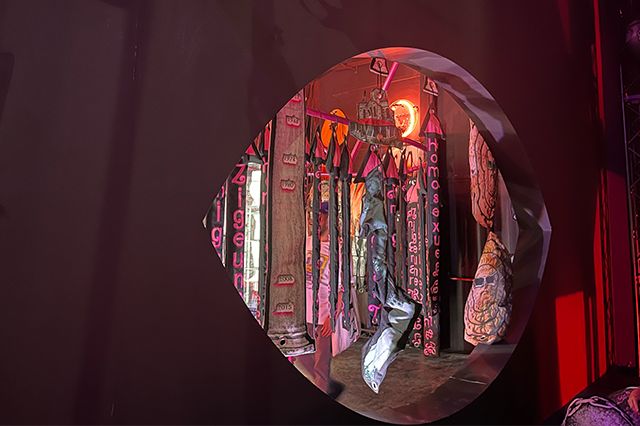
Yes, because in the pavilion, as the Exape Room is called, there really is a room that looks like us in every way. The predominant color is a bright red, which mixes with blue, black and other vibrant effects. At Venice Insider Guide, we highly recommend visiting the pavilion. But in the meantime, enjoy the photos we took.
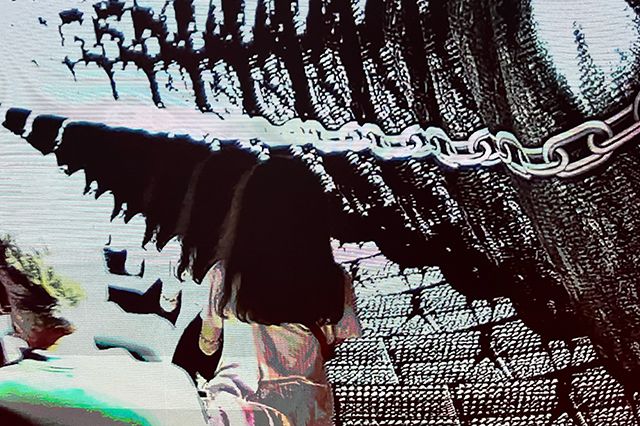
The Greek Pavilion Venice Biennale 2026 as a Contemporary Platonic Cave
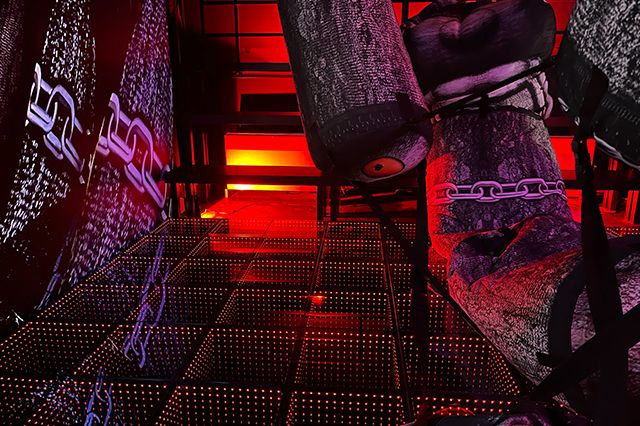
Angelidakis sees the Greek Pavilion Venice Biennale 2026 as a modern-day Platonic cave. In the famous allegory, prisoners in a cave watch shadows on a wall - but in this space, it's visitors who're watching their own reflections on screens and surveillance cameras feeding back distorted images in real-time. The installation reimagines Plato's allegory in the context where shadows are Instagram feeds, nationalist propaganda, and tourist brochures.
The pavilion's divided into two distinct areas - each with its own distinct mechanism for producing 'truth':
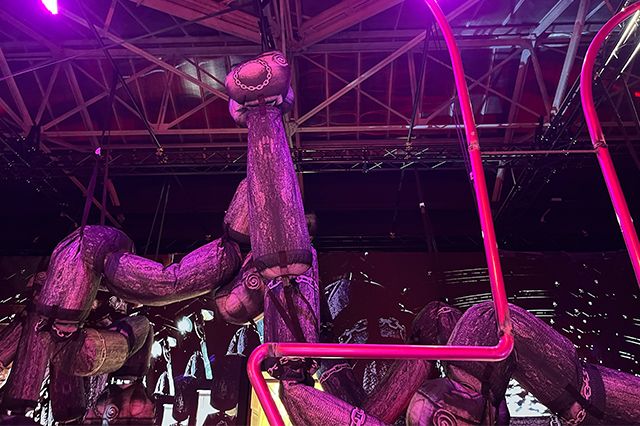
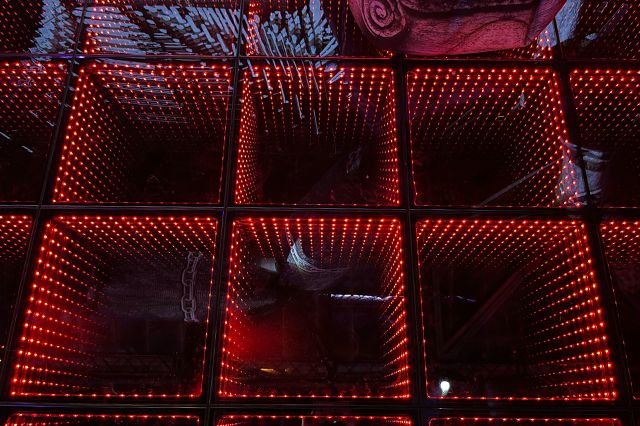
- The Bouzoukia Stage: An LED-lit dance floor's playing Frankie Goes to Hollywood's 'Relax'. There are soft sculptures mimicking fallen columns from Hagia Sophia that serve as seating - and neon signage, projections and surveillance feedback loops that evoke a nightclub, drag performance and digital spectacle. This space references queer expression and marginalised bodies - including Zak Kostopoulos, whose death remains a painful wound in Greek public life.
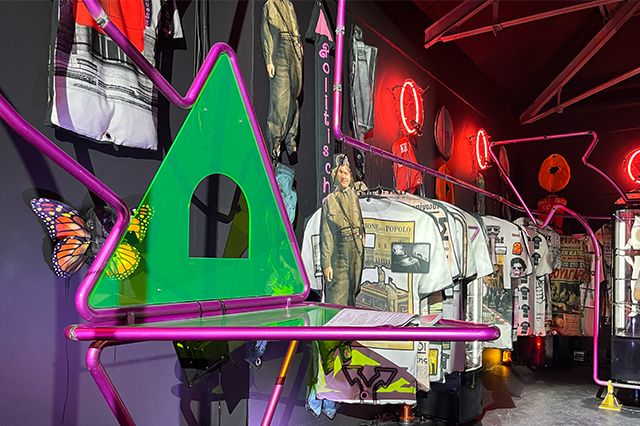
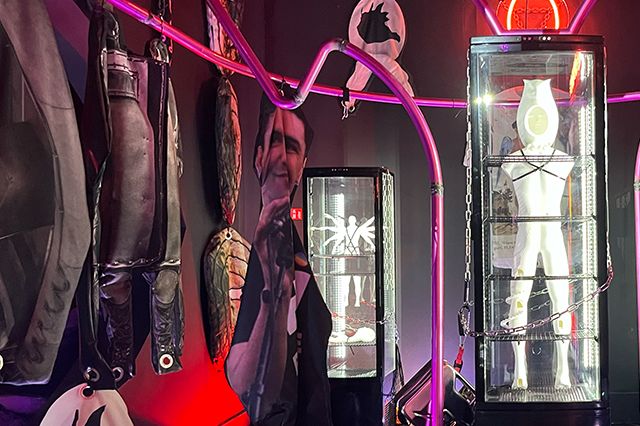
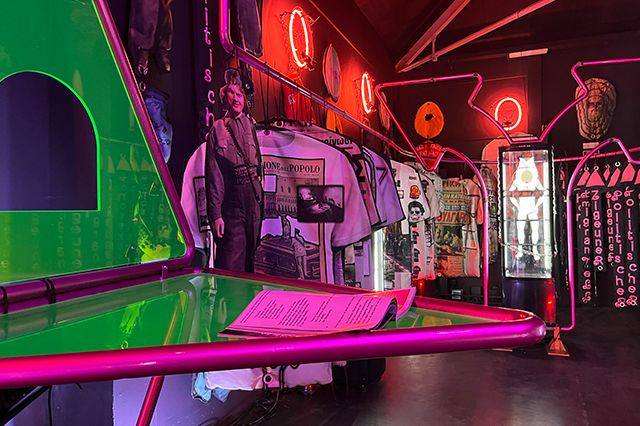
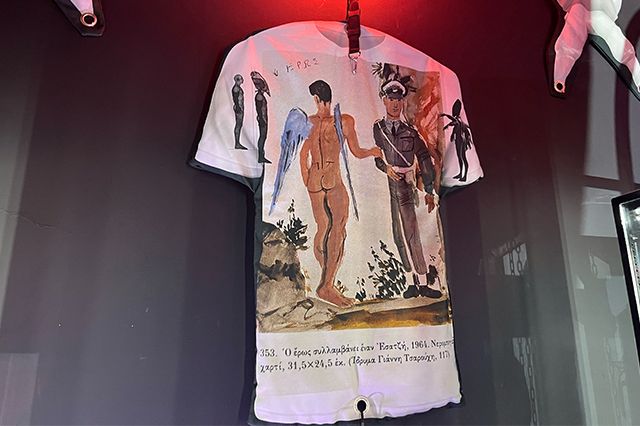
- The Other Kiosk: A periptero-style souvenir zone displays T-shirts, trinkets, books and merch-style relics - a kind of gift shop that cuts a weird figure against the backdrop of contested history. Visitors navigate between these two zones like they're inside a specially staged escape room - and with each political choice they make while moving around, they get different 'versions' of Greece. The pavilion's installations merge contemporary concerns with classical narratives - and the tension between reality and cultural fixations is what it's all about. There's no fixed solution, just the question of what sounds like truth today and what's a shadow.

Architecture, History and the Position of the Greek Pavilion Biennale 2026
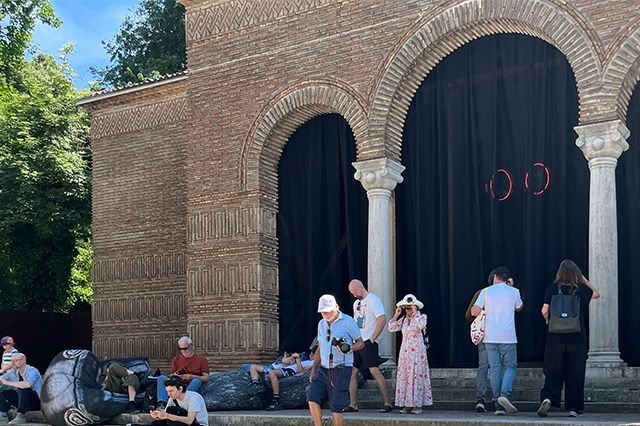
The Greek Pavilion Biennale 2026 itself was constructed in a neo-Byzantine style by architect Y. Papandréou between 1933 and 1934 - a time when Greece was still defining its modern identity through Byzantine revival motifs. The building's ecclesiastical style, with Greco-Byzantine arches and a marble inscription reading 'GRECIA' above the entrance, captures a moment when Greece was trying to make its mark through a revival of its Byzantine heritage.The T-shaped hall is nestled right in the middle of the main cluster of historic national pavilions in the Giardini.
The Greek and Austrian pavilions were both officially launched in 1934 - the same moment in history as fascism was on the rise and the Austrians were already in the midst of it, sharing that exact same historical moment of construction. Andreas Angelidakis has described his own building as "a souvenir of a period when Greece was still searching for its identity", and he paints a picture of a space whose architecture isnt just a neutral background, but actually raw material that hasnt been edited out of the picture. The pavilion's architecture has a distinctly ecclesiastical feel, with a style that serves as a declaration of national image in the world of international art exhibition spaces - you know, a way for the Greeks to stand out from the crowd.
Visitor Experience: How to Get the Most out of "Escape Room"

Visitors walk through the Giardini and come face to face with the Greek pavilion's Neo-Byzantine frontage, then step through the entrance into a space that pitches from daylight to neon-lit darkness in the blink of an eye. And then you are in - inside the pavilion's sprawling, light-and-sound-filled layout that really is a maze, and you get to explore multiple contrasting thematic zones where the sound, light and images compete for your attention.
In the bouzoukia zone, the LED floor is pulsing underfoot and you can sit on those soft column-shaped pouffes, watch your own image get projected onto screens in all sorts of weird and wonderful ways, and listen to how pop music and politics have become this twisted spectacle. In the kiosk zone, the objects on display look like souvenirs but are actually wry comments on how culture gets turned into a commodity - how it gets bought, sold, and packaged up for consumption.
The exhibition is pretty one-two about the tension between what is real and what we imagine or get caught up in our 'bubble'.
- Take a look at how each zone changes up the image of Greece and look into both mechanisms of truth
- Read the wall texts which help you see the connections between 1934 and now
- Have a seat, lounge around and see how the space changes your sense of direction and balance in the world
- Think about whether the "Escape Room" actually offers an exit, or is it just another constructed reality.
No set solution, no countdown timer, no way out. unlike those commercial escape rooms that give you a way out, this work leaves you dangling, wondering if art and tourism give you a way to escape or just another version of reality.
FAQ about Greece Pavilion Biennale 2026
Below are some answers to common practical and conceptual questions that visitors might have about the Greek pavilion at the Venice Biennale 2026.
Where is the Greek Pavilion located?
The Greek Pavilion Biennale 2026 is located in the Giardini della Biennale in Venice. It's right in the main cluster of historic national pavilions - you can see it from both the main entrance and the side. So, visitors can get there from either the main gate or the back door of the Giardini. It's actually one of the last pavilions you get to when entering from the main gate.
When can visitors see Andreas Angelidakis' "Escape Room"?
The installation is on view from May 9 to November 22, 2026, during the standard la Biennale di venezia opening hours. Check the official Biennale website before visiting for up-to-date details on time slots or special opening days.
Is the Greek Pavilion 2026 accessible to visitors with reduced mobility?
The main entrance is up a few stairs, but there's a path that goes all the way round to the side that's a lot easier to navigate. Visitors who need some extra support or need to take a different route should talk to Biennale staff or look at the official maps to see which way is best.
Do I need a separate ticket to get into the Greek Pavilion Venice Biennale 2026?
Getting into the national pavilions in the Giardini is all part of the standard Venice Biennale Arte ticket. No separate ticket price needed, but always check the official Biennale site each season for the latest ticketing details.
Is "Escape Room" suitable for children and non-specialist visitors?
The installation is actually designed for people who are new to contemporary art. it does contain some references to politics, history and digital culture that might need a bit of extra context for kids, or for people who arent familiar with all that kind of thing. But that means that non-specialist visitors can just come in and get drawn into this immersive story about how nations create their own identity without having to be an expert on the whole thing.
Greek Pavilion Venice Biennale 2026: Conclusion
Andreas Angelidakis is spearheading Greece's representation at the 61st Venice Biennale in 2026 with his project 'Escape Room', which gets underway in the Greek Pavilion Venice Biennale 2026 at the Giardini on May 9th and runs right through to November 22nd, 2026.
The Greece Pavilion Venice Biennale 2026 is transformed into a modern-day Platonic cave - inspired by that famous allegory of the cave - where two mechanisms for arriving at 'truth' come to the fore: a digital bouzoukia stage where soft columns take the form of a sort of clubbing nirvana, and an alla turca souvenir kiosk that's a wry commentary on how tourist culture and Ottoman Greece get bundled together.
Angelidakis has always treated the 1930s-era Greek Pavilion Biennale 2026 in the Giardini, built in a neo-Byzantine style back in 1933-1934, as a kind of historical souvenir of Greece's search for identity through the national pavilions system.
The Greek Pavilion Venice 2026 has become a critical site for examining national identity and historical trauma, with 'Escape Room' this year taking aim at modern post-truth politics through digital illusions and cultural memory.
Follow us Venice Insider Guide!
- The photos in this article of the Greek Pavilion Biennale 2026 are the property of Venice Insider Guide.