
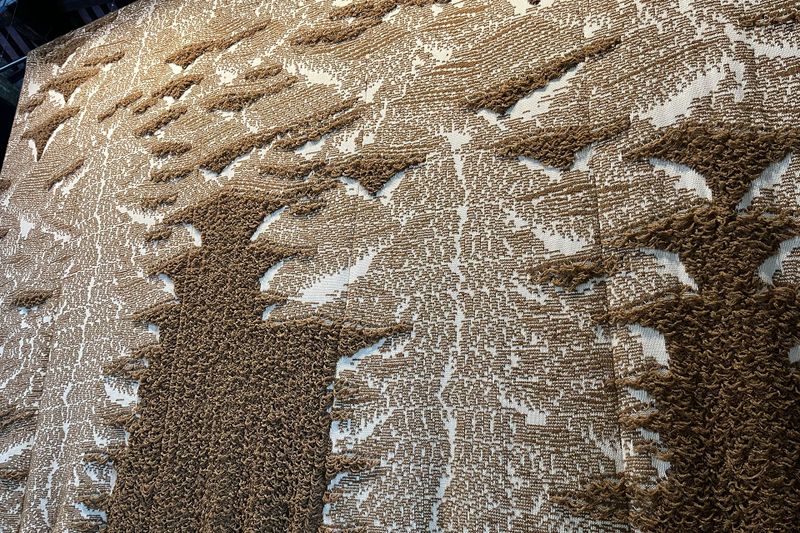
Hey dear travellers and lovers of the Serenissima, Uzbekistan Pavilion Venice 2026, The Aural Sea, is the one of the famous pavilion in this Biennale.
At Venice Insider Guide, we went personally and will give you all the information, review, descriptions and photos of the Uzbekistan Pavilion Venice Biennale 2026.
This article-guide by Venice Insider Guide provides practical details (dates, venue, visitor tips) alongside an interpretive guide to the artworks, themes, and cultural significance of the Uzbekistan Pavilion Venice Biennale 2026.
Uzbekistan Pavilion Venice 2026 - The Aural Sea
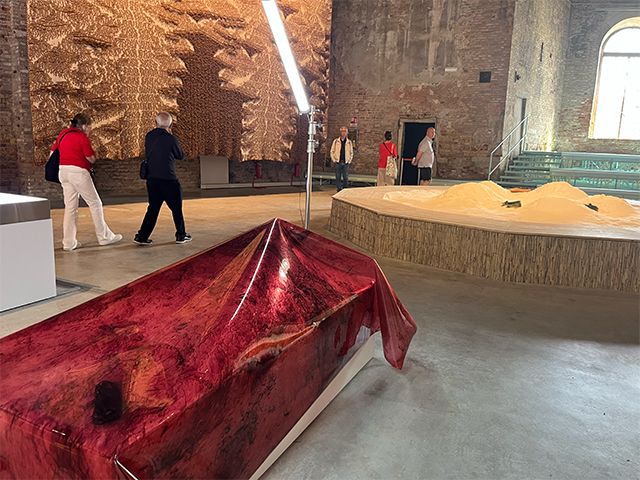
This is the information you need to know about the Uzbekistan Pavilion Venice 2026 right away:
- The Uzbekistan Pavilion at the 2026 Venice Biennale, titled "The Aural Sea," is the official Uzbekistan National Pavilion. It runs from May 9 to November 22, 2026, at the Arsenale, exploring the Aral Sea crisis through sound, myth, and contemporary art.
- The Uzbekistan Pavilion Venice Biennale 2026 brings together artists from Uzbekistan and abroad-including Xin Liu, Zi Kakhramonova, Jahongir Bobokulov, and Nguyen Phuong Linh-to explore environmental memory and speculative futures of the Aral Sea region.
- The project continues the foundation's long-term investment in art and culture development, positioning Uzbekistan within the wider Central Asia and global contemporary art scene.
Introduction: Uzbekistan National Pavilion at Venice Biennale 2026
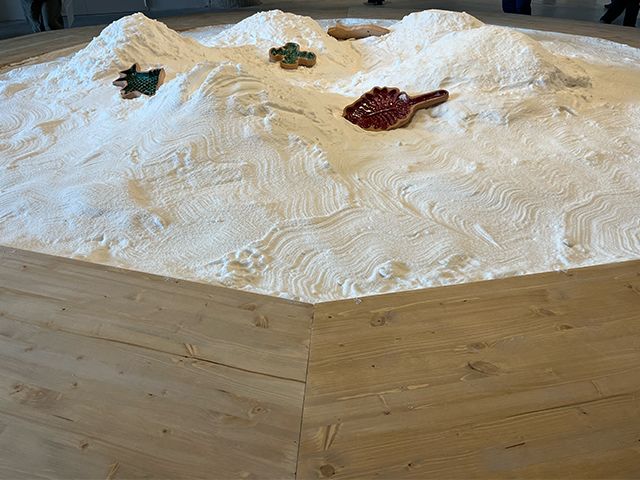
Inside the cavernous halls of the Arsenale in Venice, the Uzbekistan National Pavilion 2026 transforms industrial space into a zone of listening. The exhibition, titled "The Aural Sea," places Uzbekistan art on the world's most influential contemporary art stage at La Biennale di Venezia, inviting visitors to hear a landscape that most only know as a statistic.
This is Uzbekistan's third participation in the Venice Biennale, following presentations in 2022 and 2024. The pavilion connects Uzbekistan art and culture with the climate crisis, environmental justice, and the deep history of the Aral Sea-a body of water whose near-disappearance reshaped an entire region.
The Aural Sea: Concept, Title, and Aral Sea Context
The exhibition title plays on two words: "aural," meaning related to listening and sound, and "Aral," the inland sea in Central Asia whose destruction became one of the twentieth century's worst environmental disasters. Sound and listening serve as primary mediums and metaphors in the exhibition, asking visitors to attend to what a landscape remembers.
Before the 1960s, the Aral Sea was the fourth-largest inland sea on Earth, covering nearly 70,000 square kilometers. Soviet-era irrigation schemes diverted its feeder rivers to supply cotton monocultures across the republic and neighboring Kazakhstan. The consequences were staggering:
- By 2007, the Aral Sea had lost 90 percent of its mass, leaving behind toxic dust plains and exposed seabed.
- The local ecosystem was decimated due to hypersalinisation, destroying fisheries that once sustained communities.
- Nearly 30,000 people relied on the fishing industry before the sea's decline, and their livelihoods collapsed alongside the water.
- Karakalpakstan, the autonomous republic in western Uzbekistan, bore the brunt of public health crises from airborne salt and pesticide residues.
The central concept links environmental transformation with collective memory and mythology. Rather than presenting the Aral as a dead zone, the Uzbekistan Pavilion Venice 2026 draws visitors into a sense of "slow violence"-the gradual, compounding damage that statistics alone cannot convey. The Aural Sea reframes this disaster as a space where past, present, and future coexist, inviting perception through stories, myths, and speculative futures emerging from the dried seabed.
Uzbekistan Pavilion Venice 2026: Curatorial Vision and the Role of the Culture Development Foundation
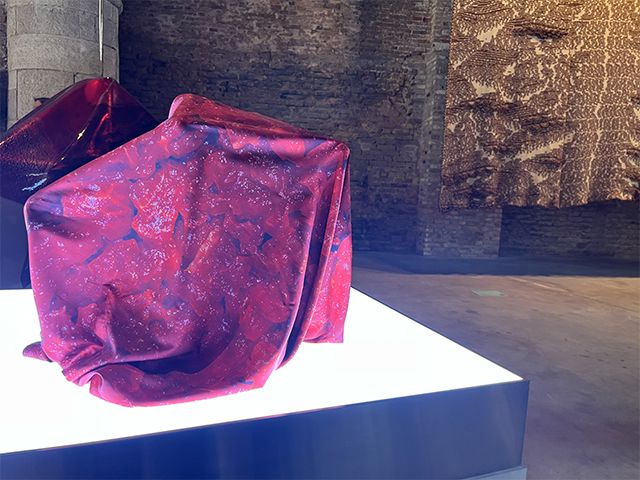
The curatorial team behind the Uzbekistan Pavilion Venice 2026 is young, transnational, and deliberate. Five curators developed the exhibition: Sophie Mayuko Arni (Switzerland), Aziza Izamova (Uzbekistan), Kamila Mukhitdinova (Uzbekistan), Nico Sun (China), and Thái Hà (Vietnam). All are graduates of the inaugural cohort of the Bukhara Biennial Curatorial School, a programme launched to build curatorial capacity across Central Asia and beyond.
The Art and Culture Development Foundation of Uzbekistan-the commissioner behind the pavilion-drives a broader mission of art and culture development: preserving heritage, fostering international dialogue, and supporting emerging talent. Commissioner Gayane Umerova has stated that the Uzbekistan Pavilion Venice Biennale 2026"reflects the Foundation's long-term commitment to the Aral Sea region and to cultural development through knowledge and sustainable engagement."
The curatorial methodology draws on several pillars:
- Myth making and speculative fiction as tools for thinking through environmental change
- Research into Karakalpak material cultures, oral histories, and the literary work of writers like Allayar Darmenov, who began writing stories set in the Aral landscape
- The curators draw inspiration from the epic tales of the Karakalpak people, treating imagination as agency rather than escape
- The exhibition promotes interdisciplinary collaboration between art, science, and local knowledge
- The Uzbekistan Pavilion Biennale 2026 connects with initiatives like the Aral Culture Summit and Aral School, forming a transdisciplinary platform convening artists, scientists, and communities
This approach positions the Uzbekistan Venice Biennale 2026 as more than an exhibition-it is part of a multi-year strategy that includes Palazzo Franchetti events, the Bukhara Biennial, and new museum architecture by Tadao Ando.
Artists and Works: From Uzbekistan Art to Global Dialogues
The Uzbekistan Pavilion Venice 2026 draws together artists from Uzbekistan, broader Central Asia, and the international scene. Each contribution orbits the Aral Sea and water imaginaries, creating an interconnected composition of perspectives on life, loss, and possibility.
- Xin Liu
- Jahongir Bobokulov
- Zi Kakhramonova
- Aygul Sarsen
- Zulfiya Spowart
- Nguyen Phuong Linh
- A.A. Murakami
Together, the artists engage the Aral Sea through ecological imagination, transforming it from a site of catastrophe into a centre of knowledge where scientific data, folklore, and human testimony intersect.
Myth-Making, Storytelling, and Uzbekistan Art and Culture
The Uzbekistan Pavilion Venice 2026 uses myth-making and storytelling to reframe the ecological crisis-not as an escape from reality but as a living cultural technology for metabolizing loss. Myth-making helps process ecological rupture in cultures where oral tradition has always carried knowledge across generations. The exhibition explores storytelling as a response to environmental change, constructing what the curators call "poly-temporal" landscapes: spaces where the Aral Sea's geological past, Soviet industrial era, and future climate scenarios overlap in a single image, film, or soundscape.
This imaginative approach situates Uzbekistan art within broader Central Asia mythologies-desert spirits, water deities, caravan routes across the dried seabed-while resonating with global eco-criticism and Indigenous knowledge debates. The pavilion's theme is "The Aural Sea" focusing on myth-making as a form of cultural survival.
Key narrative devices used in the Uzbekistan Pavilion Biennale 2026 include:
- Dream sequences and personified seas drawn from Karakalpak oral traditions
- Archival fiction that layers historical documents with speculative narratives
- Ritual performance and sound composition that reactivate the sense of a vanished body of water
- Literary touchstones from writers and poets, including Allayar Darmenov's stories of swordfish remembering desert years
Uzbekistan Pavilion 2026, Central Asia, and the Venice Biennale Landscape
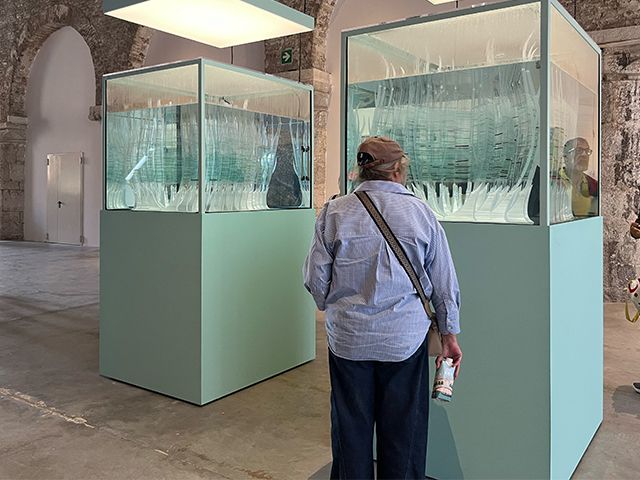
The Uzbekistan Pavilion 2026 sits within a growing ecosystem of Central Asian representation at the Venice Biennale. National pavilions from the region are increasingly visible, and the republic's participation contributes to repositioning Central Asia on the global art map.
The Uzbekistan Pavilion Venice 2026 functions as a transdisciplinary platform-not just a showcase but a node connecting curated exhibitions, public programming, and institutional development back home. Its strategic goals include:
- Building international exposure for Uzbekistan art and emerging curators
- Creating residency and collaboration opportunities with global institutions
- Encouraging visitors to explore further-whether at museums in Tashkent or the renowned Savitsky Museum in Nukus, which holds one of the world's largest collections of Soviet-era avant-garde art
Uzbekistan Pavilion Venice 2026: Practical Information and How to Experience The Aural Sea
A visit to the Uzbekistan Venice Biennale 2026 begins with entering a space designed to envelop you in sound before you see anything. The architecture of the exhibition encourages slow movement-allow yourself to be curated through the installations rather than rushing between them.
- Dates: The exhibition runs from May 9 to November 22, 2026. From May 9 to September 27, hours are 11 AM–7 PM; from September 29 to November 22, 10 AM–6 PM (Tuesday–Sunday; closed Mondays).
- Location: Quarto Tesa, Arsenale, Venice-accessible via the Arsenale vaporetto stop.
- Admission: Included with the standard Biennale ticket; no separate booking required.
- Time needed: Allocate at least 30–45 minutes. The immersive audio-visual works reward patience.
- Preparation: Read the wall texts on Karakalpak culture and Aral Sea history before entering key installations-they deepen the experience considerably.
- Resources: A Uzbekistan Pavilion Biennale 2026 catalogue and guided tours led by trained art mediators from Uzbekistan are available.
The Aural Sea isn't just an art show. It's an encounter with a landscape that the world nearly forgot-and an invitation to consider Uzbekistan art and culture's evolving role in global climate conversations. Whether you're an art professional or a curious traveler, this pavilion will change how you listen.
Conclusion: review
So, in conclusion, we have one review for Uzbekistan Pavilion Venice 2026: is very interesting.The colors, the shapes, the movement: everything brings us back to a very specific imagination.
The Venice Biennale said on the matter:
"To make sense of the loss of the Aral Sea, eighteen-year-old Uzbek writer Allayar Darmenov invented mythologies. In his stories, swordfish visit remnants of saxaul forests, race through the water, remember the desert years. His replenished Aral is a space where fairy tales correspond to real life, where fantasy becomes agency. (...) If the climate crisis is a failure of imagination, then imagination is how the Aral will survive. The Aral’s demise echoes ecological upheavals worldwide. The Uzbekistan Pavilion Venice Biennale 2026 invites local and international artists to approach the Aral as shared ground for myth-making. Working across installation, interactive work, and painting, Jahongir Bobokulov, Zi Kakhramonova, Aygul Sarsen, Zulfiya Spowart, Xin Liu, A.A.Murakami, and Nguyen Phuong Linh each engage the sea through their own ecological imagination."
For sommary:
- The Uzbekistan pavilion at the 2026 Venice Biennale, officially being called "The Aural Sea", is the official face of Uzbekistan at the event. Its on from May 9 all the way through to November 22, 2026, at the Arsenale - where it will delve into the Aral Sea crisis using sound, local myth and contemporary art to explore a whole lot of themes.
- The Uzbekistan pavilion for the Venice Biennale 2026 brings together artists from both Uzbekistan and further afield - including Xin Liu, Zi Kakhramonova, Jahongir Bobokulov and Nguyen Phuong Linh - to take a close look at what we can learn from the Aral Sea region about how we remember the past and what our futures might hold.
Follow us Venice Insider Guide for similar contents!
FAQ
Who is the chief curator of the Uzbekistan Pavilion Venice 2026?
The curatorial team is led collectively by five curators rather than a single chief curator. Sophie Mayuko Arni, Aziza Izamova, Kamila Mukhitdinova, Nico Sun, and Thái Hà co-developed the exhibition. All emerged from the inaugural cohort of the Bukhara Biennial Curatorial School, a programme created by the Art and Culture Development Foundation to train a new generation of curators.
Why is the Aral Sea so important to Uzbekistan art and this pavilion?
The Aral Sea lies partly within Uzbekistan, and before 1960 it was the fourth-largest inland sea in the world. Its dramatic shrinkage reshaped the lives, economies, and cultures of communities in Karakalpakstan and wider Central Asia. The Aral Sea provided livelihoods for nearly 30,000 people. Artists and curators see the Aral as a powerful symbol of ecological crisis, memory, and resilience, making it central to "The Aural Sea."
How does the pavilion relate to broader art and culture development in Uzbekistan?
The Uzbekistan Pavilion Venice 2026 is part of a wider strategy by the Culture Development Foundation and national institutions to promote Uzbekistan art internationally, support emerging curators via the Bukhara Biennial Curatorial School, and use major platforms like the Venice Biennale to foster long-term cultural exchange and investment in the country's creative ecosystem.
Which artists are expected to participate in The Aural Sea?
The The Aural Sea features artists including Jahongir Bobokulov, Zi Kakhramonova, Aygul Sarsen, Zulfiya Spowart, Xin Liu, A.A. Murakami, and Nguyen Phuong Linh-balancing local Uzbekistan art voices with international contributors whose practices intersect with ecological narratives and material cultures.
Can I visit the Uzbekistan Pavilion 2026 without a separate ticket?
No separate booking is required. The Uzbekistan Pavilion 2026 at the Arsenale is accessible with the standard La Biennale di Venezia ticket throughout the exhibition period from May 9 to November 22, 2026.
- The photos of the Uzbekistan Pavilion Venice 2026 in this article are the property of Venice Insider Guide.