
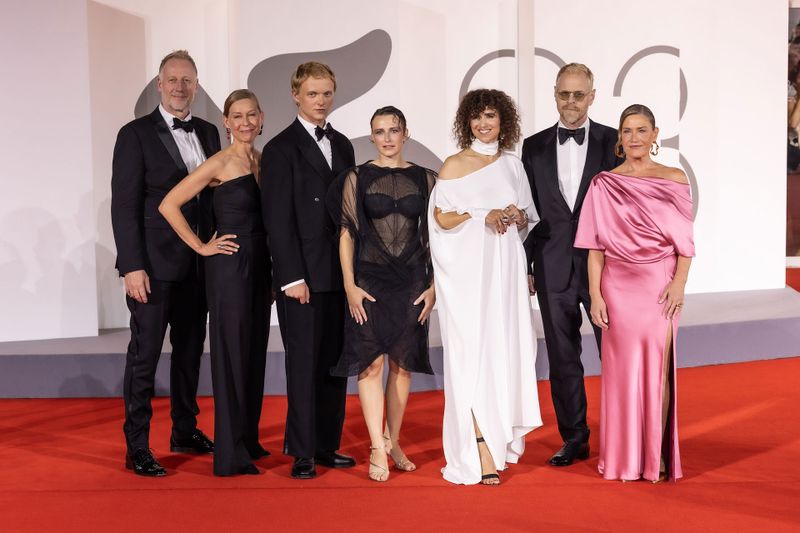
Hey travelers, are you looking for information about Woman Unknown? Let's find out which film won the Golden Lion at the Venice Film Festival 2026.
In the summer of 1945, Denmark celebrated its liberation from five years of Nazi occupation. Within days, a different kind of reckoning began. Across the country, women accused of intimate relationships with German soldiers were dragged into the streets, their heads shaved, their bodies branded. Their names were forgotten. The film Woman Unknown, titled Kvinde Ukendt in Danish, takes one such woman and refuses to let her remain nameless. Directed by May el-Toukhy and co written with Maren Louise Käehne, this 2026 Danish period drama follows Marie, a young nanny and former housekeeper whose wartime past threatens to destroy her chance at a new life.
Discover all the info you need in this complete post on Woman Unknown by Venice Insider Guide.
Woman Unknown Film: all the info you need
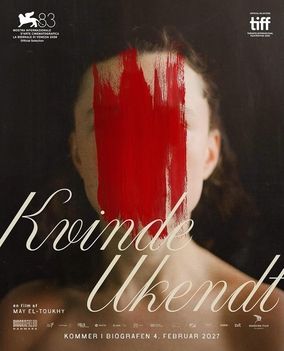
- Woman Unknown (Kvinde Ukendt) is a 2026 Danish period drama directed by May el-Toukhy. The story centers on Marie, a former housemaid whose secret love affair with a German soldier during World War II threatens her postwar engagement to a wealthy widower named Christian.
- The film is set in post-war Copenhagen, 1945, during Denmark's liberation from Nazi occupation. It depicts the brutal public retribution against women labeled as horizontal collaborators; those accused of intimate relationships with occupying soldiers.
- The world premiere took place on 6 September 2026 in the main competition at the Venice Film Festival. It was the only film in the initial competition lineup directed solo by a woman.
- The Nordic and Baltic co production was led by Nordisk Film Production, with partners including SIA Nafta Films and Nordisk Film Production Sverige. The director's previous collaboration with Catherine Breillat on Last Summer informs its approach to female desire and moral ambiguity.
- Core themes include shame and survival, class mobility, gendered double standards after the second world war, and how the film reframes the unknown woman; the kvinde ukendt; as the center of the narrative rather than its footnote.
Woman Unknown plot: Synopsis and Historical Context
Copenhagen, summer of 1945. The war is over. Denmark was liberated from Nazi occupation in May, and the country is moving between celebration and chaos. Marie works as a nanny and housemaid in the household of Christian, the household's patriarch, a wealthy older widower. As preparations unfold for their engagement and an extravagant dinner party to announce it to his social circle, Marie's past begins to surface through a chance encounter with someone who knows what she did during the occupation.
The film intercuts between the present and the war years:
- In the present timeline, Marie guards a shameful secret while trying to secure her new status as Christian's fiancée. She is on the verge of becoming a lady of the house, a leap in class that would erase her origins as a working-class servant.
- In flashbacks, the story reveals that Marie had a sexual relationship with a young German soldier during the occupation. The relationship carried emotional complexity; it was not reducible to simple betrayal or simple romance. Marie was aware of the risks and the social consequences if discovered.
- The film shows Marie struggling with internal scar tissue affecting her intimacy, both the physical and psychological marks left by wartime choices and the fear of exposure.
After liberation, a wave of post war anarchy swept Denmark. Women faced severe retribution for relationships with German soldiers. Public shaming rituals targeted women labeled as horizontal collaborators. The punishments were extrajudicial: head shaving, forced marching through streets, neighbors spitting insults, and, in some cases across Europe, women were branded with swastikas for collaboration. These acts were not court-ordered; they were socially enforced. Historians estimate at least 50,000 women in Denmark were categorized as "pro-German girls" during the occupation, and about 5,500 children were registered as Danish-German.
Marie's past threatens her future. When neighbors and members of the Danish resistance begin circulating rumors, Marie is labeled a horizontal collaborator by society. She is reduced to a stereotype: traitor, collaborator, immoral woman. The community does not care about her interior life, her conflicting loyalties, or the pressures that shaped her wartime choices.
She is, metaphorically and literally, a Woman Unknown. The community sees only the label. The film peels it back and reveals the person underneath, exposing the gap between who Marie is and who others decide she must be.
Woman Unknown film 2026: Characters and Performances
This section focuses on the central characters, their relationships, and the performances that anchor the story of Woman Unknown film 2026. The cast includes Mathilde Arcel as Marie and Carsten Bjørnlund as Christian, both delivering restrained, physically precise performances that rely on silence and close-ups rather than exposition.
Marie (Mathilde Arcel)
- Marie's arc traces a path from housekeeper to would-be wife of a wealthy widower. Her ambition is inseparable from her vulnerability. She does not want status for vanity; she wants safety. Marie fears losing her new social status because she knows that in post-war Copenhagen, women accused of collaboration lived in terror of retribution. Marie risks losing her status due to her hidden past, and Arcel's performance makes visible the weight of that constant threat through small physical choices: averted eyes, held breath, hands that grip fabric a beat too long.
- Arcel won the Volpi Cup for Best Actress at the 83rd Venice Film Festival for this role. Her work is notable for what it withholds; Marie's emotions surface in controlled bursts, a style that mirrors the character's survival strategy. She cannot afford to be seen, to be known.
Christian (Carsten Bjørnlund)
- Christian is the wealthy widower, older and established, whose position in post-war Danish society gives him authority over Marie's fate. His reaction when Marie's past begins to surface is shaped by social norms and class privilege. The film does not reduce him to a villain or a savior; instead, it examines how his own wartime experience and his investment in respectability influence whether he can accept what Marie has done or whether he, too, will judge her.
- Bjørnlund plays Christian with quiet authority, a man who is generous within the bounds of convention but uncertain when convention itself is challenged.
Supporting characters
- The film populates Marie's world with servants, Christian's children, working-class neighbors, and resistance fighters who participated in the post-war reckoning. These supporting roles function as a chorus of judgment, mirroring the broader social tensions about class mobility, gender, and retribution. They are not given deep individual backstories; they operate as representatives of a community deciding who belongs and who does not.
The performances across the cast stay naturalistic, favoring restrained emotion over melodrama. The director uses close-ups and silence as primary tools, letting the audience read faces rather than hear explanations. This approach humanizes a story rooted in the large-scale events of the world war by keeping the focus on one woman's body, one woman's face, and the terror written across it.
Woman Unknown 2026: Production, Co Production, and Festival Journey
This section outlines how Woman Unknown 2026 was developed and produced, then traces its path from set to the Venice Film Festival world premiere and beyond.
Development and production partners
- Directed by May el-Toukhy, co written with Maren Louise Käehne, and produced by Mikael Rieks. The lead production company is Nordisk Film Production in Denmark.
- Co production partners include SIA Nafta Films in Latvia and Nordisk Film Production Sverige in Sweden. Additional support came from Film i Väst (Väst world sales facilitation and regional production support), the Latvian Investment and Development Agency (LIAA), and the Riga Film Fund.
- The production shot 25 of its 28 filming days in Riga, Latvia, using the city's period-appropriate architecture to stand in for 1945 Copenhagen.
Key crew
The team behind the film draws on established Nordic talent. Cinematography was handled by Oskar Skriver, with sound design by Mikkel Hess (sound mixing and design). The edit was completed in close collaboration between el-Toukhy and her editorial team. The costume and production design team, including contributors Sofia Nolsøe, Rebecca Richmond, and Marina Bouras, built a muted period-correct wardrobe and set design. Additional creative contributions came from Flora Yde Sander, Mia Plantin, and Thorbjørn Hedegaard. World sales are handled by TrustNordisk, which positioned the film for international distribution.
Festival journey
- Woman Unknown held its world premiere on 6 September 2026 at the 83rd Venice Film Festival, competing in the main competition for the Golden Lion. It was the only film in the initial competition lineup directed solo by a woman, a fact that shaped press coverage and panel discussions about gender representation at class-A international film festivals.
- The film screened for an audience that included international distributors and press, and its inclusion helped elevate a Danish, partially Baltic and Swedish co production to global attention at a time when Nordic cinema continues to punch above its weight in festival circuits.
- TrustNordisk managed the international sales strategy, positioning the film for staggered theatrical release in Denmark and broader Nordic regions, followed by select international territories.
May el-Toukhy Woman Unknown: Themes, Style, and Links to Catherine Breillat and Last Summer
May el-Toukhy has described her interest in the female body as a "battlefield." In a Cineuropa interview, she explained that she initially considered setting the story during a 16th-century witch hunt before settling on 1945 Denmark, where the personal and structural dimensions of stigma could be examined within living memory. This section analyzes the film's thematic architecture and its connection to European auteurs like Catherine Breillat, whose 2023 film Last Summer was a remake of el-Toukhy's earlier work Queen of Hearts.
Core themes
- The film explores themes of female shame and societal punishment. Marie is not punished by a court; she is punished by a community. The stigma attached to women's bodies during and after World War II is central. Women were labeled horizontal collaborators for their wartime actions, a term that reduced sexual and romantic life to a matter of national honor.
- Class mobility in post-war society is the other engine of the story. Marie's leap from nanny and housemaid to fiancée of a wealthy widower threatens the social order twice: once because she is rising above her station, and again because her past could expose the fragility of post-war respectability.
- The concept of the unknown woman runs deeper than a plot device. In art and cultural history, anonymous female figures have served as projections of male desire and societal anxiety. L'Inconnue de la Seine became an iconic face of romanticism; anonymous portraits often reflect the male gaze and societal projections rather than the actual person depicted. The unknown woman often represents mystery and idealized beauty, but the narrative of the unknown woman frequently shifts from mystery to critique of historical records. Historical accounts often overlook women, preserving the names of men instead. The film takes this pattern and inverts it, making the unknown kvinde ukendt the subject rather than the object.
- The unknown woman can represent collective female experiences and identities, and in this film she does. Marie is not one person; she is a composite drawn from the stories of thousands. She also serves as a tabula rasa for viewers; the audience's judgment of her choices mirrors the judgment of the post-war community.
- The unknown woman embodies themes of urban isolation and anonymity, and Marie's anonymity becomes a survival tool. Anonymity can be a form of resistance against societal expectations; by remaining unknown, Marie survives longer than she would as a known collaborator.
- The unknown woman is frequently portrayed as a source of aesthetic salvation and existential dread. The film holds both: Marie offers Christian a second chance at domestic life (salvation), but her hidden aspects carry the threat of social ruin (dread).
Gendered double standards
Men who profited from or cooperated with the occupation often escaped punishment. Post-war, women were publicly shamed and branded for collaboration while male collaborators faced less visible, less corporeal consequences. Of the roughly 13,500 people convicted under Denmark's post-war penal laws, the women convicted; between 300 and 400; were prosecuted specifically for denunciation, not for the intimate relationships themselves. The film makes this asymmetry visible without lecturing about it. Marie's body bears the cost; Christian's does not.
Aesthetic and narrative style
- The film is an expertly managed drama built on restraint. Heavy use of interiors; dining rooms, kitchens, bedrooms; establishes domestic space as the arena where power is negotiated. El-Toukhy cited Dreyer's Day of Wrath and Greek tragedy (Antigone in particular) as aesthetic reference points. The production design is minimalist, sometimes stylized to resemble theatre, with a muted post-war color palette.
- Sound design contrasts the noise of liberation; crowds, fireworks, patriotic songs; with the silence of Marie's interior world. The audience hears what Marie hears: the celebration outside and the dread inside.
- El-Toukhy's sensibility connects to Catherine Breillat's long-standing interest in female desire, transgression, and social judgment. Their professional relationship (el-Toukhy directed Queen of Hearts; Breillat directed Last Summer, a remake of Queen of Hearts) informed el-Toukhy's non-didactic approach to Marie's sexuality and moral ambiguity. Both directors refuse to make their female protagonists sympathetic in conventional terms. They make them visible.
Concrete scenes illustrate these ideas. The engagement dinner; the extravagant dinner party where Marie is introduced as Christian's future wife; becomes a stage where her past threatens to erupt. A later sequence, in which Marie is publicly shamed in the street, uses long takes and ambient sound to keep the audience inside her experience rather than watching from a comfortable distance.
Reception, Legacy, and Where Woman Unknown Fits in World War II Cinema
Following its world premiere at the Venice Film Festival, Woman Unknown received sustained critical attention. Reviewers praised Mathilde Arcel's performance, the period production design, and the film's willingness to sit in moral ambiguity. Some criticism focused on pacing in the second act and on secondary characters who function more as symbols than as fully realized people. The film's runtime; approximately 124 minutes; was noted by some critics as stretching certain sequences beyond their narrative weight.
Festival reception
- Woman Unknown won the Golden Lion at the 83rd Venice Film Festival on 12 September 2026. Mathilde Arcel received the Volpi Cup for Best Actress. The win generated discussion about the scarcity of woman-directed films in the competition lineup and whether the festival's selection process reflects broader industry patterns.
- May el-Toukhy, as producer and director, spoke publicly about how gains made during the #MeToo era had begun to roll back, using the Venice gender imbalance as a concrete example.
Awards trajectory and distribution
- After Venice, the film was positioned as a potential contender in the international film category for the 2026-2027 awards season, with Denmark expected to submit it as its official entry. TrustNordisk's distribution strategy targets theatrical releases in Denmark, Sweden, and select European and North American markets.
- The watchable, character-driven nature of the film; its story is accessible even without deep knowledge of Danish history; has helped it connect with an audience beyond Nordic territories.
Placement within World War II cinema
- Most World War II films center resistance heroes or battlefield action. Woman Unknown inverts that focus. It examines the war's aftermath through a working-class woman's emotional life and post-war ostracism, exploring the gray areas of collaboration and survive-or-perish decision-making. In this, it shares DNA with French and Dutch films about the tondues (head-shaved women) and Norwegian films that re-examined the children of German soldiers, but its domestic, interior focus sets it apart.
- The film contributes to an ongoing European re-examination of resistance myths and national memory. For decades, the prevailing story in Denmark was one of unified resistance. Films and scholarship from the past two decades have complicated that narrative, and Woman Unknown pushes it further by centering a once-erased figure: the repressed, the forced-into-silence, the woman whose name was never recorded.
- The portrayal of Marie as a once "unknown" woman suggests a broader cultural move to center marginalized voices in world war narratives. The term kvinde ukendt; literally "woman unknown"; is not just a title. It is a historical category. Marie stands in for thousands of women whose names were not preserved, whose stories were not told, whose experiences were reduced to a single word: collaborator.
FAQ
Below are answers to practical and contextual questions about film Woman Unknown that are not fully addressed above.
Is "Woman Unknown" (Kvinde Ukendt) based on a true story?
The film is not a direct adaptation of a single documented case. Marie is a composite character reflecting the experiences of the estimated 50,000 women in Denmark who were categorized as having intimate relationships with Germans during the occupation. Director May el-Toukhy drew on the scholarly work of historian Annette Warring and spoke to surviving women who had relationships with German soldiers. The story is fictional; the historical context is documented.
What language is "Woman Unknown" filmed in, and are there English subtitles?
The primary language is Danish, with occasional German in the flashback scenes depicting Marie's wartime relationship with the German soldier. Festival and international versions include English subtitles. For the Venice screening, the film was presented with English subtitles to ensure the international audience could follow the dialogue, including the quieter, more restrained exchanges that carry much of the story's emotional weight.
How does "Woman Unknown" differ from other World War II dramas?
Instead of focusing on battlefront action, resistance heroes, or military strategy, the film centers a working-class woman's emotional life and post-war ostracism. The child she may have carried, the plans she makes for a new life with a wealthy widower, the house she cleans and hopes to own; these are the film's stakes. It examines the hidden aspects of war: what happens when the Nazis leave and the community turns on its own. This intimate, domestic focus, rooted in the moral gray zones people inhabited under occupation, distinguishes it from traditional war films.
Where can I watch "Woman Unknown" after its festival run?
After the Venice Film Festival world premiere and subsequent festival screenings, the film is expected to receive a staggered theatrical release in Denmark and broader Nordic regions, followed by select international territories. TrustNordisk is managing world sales. Availability on curated streaming platforms specializing in European and art-house cinema is anticipated after the theatrical window closes, though specific dates have not been announced as of September 2026.
What other films by May el-Toukhy or Catherine Breillat should I watch if I liked "Woman Unknown"?
May el-Toukhy's earlier feature Queen of Hearts (2019), also co written with Maren Louise Käehne, explores a similarly complex female protagonist caught in moral ambiguity and family secrets. Catherine Breillat's Last Summer (2023), which is a remake of Queen of Hearts, extends those themes into contemporary France, examining taboo relationships, consent, and social judgment. Both films share Woman Unknown's refusal to let its audience off the hook with easy moral conclusions. They marry the viewer to the protagonist's perspective and force the question: would you survive any differently?
Conclusion
So, today we talked about the film that won the Venice Film Festival 2026, Woman Unknown. This is an exciting story, in fact it won the Golden Lion. Now that you know everything there is to know about it, will you see it?
Stay tuned for more similar content on our blog: Venice Insider Guide!