
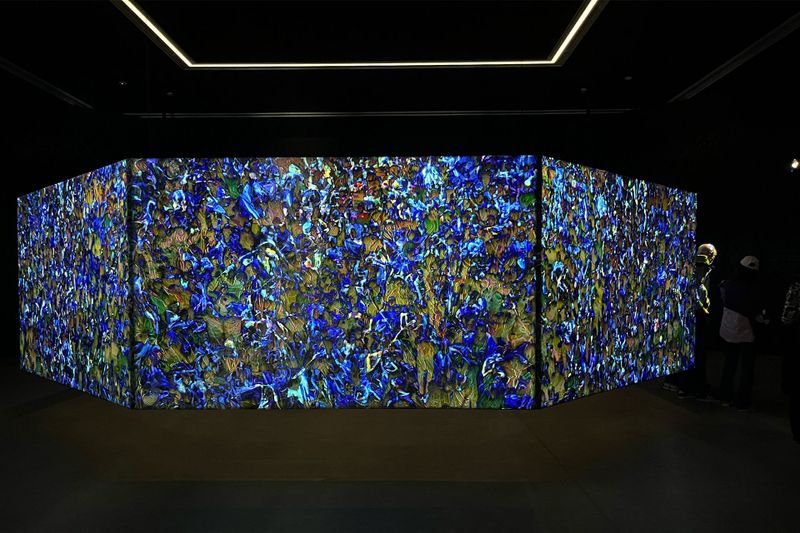
Hey travelers, the Australian Pavilion Venice Biennale 2026 presents one of the most talked-about national projects at this year's art Biennale. Artist Khaled Sabsabi transforms Australia's permanent pavilion in the Giardini into a deeply immersive meditation on spirituality, migration and belonging.
In this post by Venice Insider Guide: Here's everything you need to know about the pavilion, the artistic team behind it, and how Australia is making its mark on the world stage.
Overview of the Australian Pavilion at Venice Biennale 2026
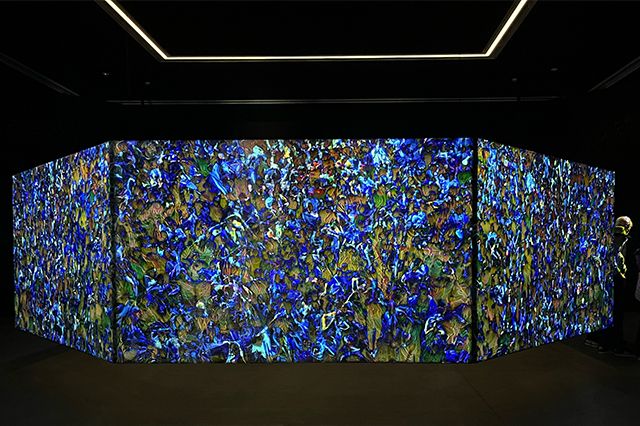
The Australia Pavilion at the Venice Biennale 2026 is Australia's national presentation at the 61st International Art Exhibition – La Biennale di Venezia, one of the most significant showcases for contemporary art in the world. The exhibition runs from 9 May to 22 November 2026, and the Australian Pavilion Biennale 2026 is located in the Giardini della Biennale in Venice.
Creative Australia, formerly known as the Australia Council, commissions and produces Australia's national participation at the Venice Biennale. For 2026, the organisation selected artist Khaled Sabsabi and curator Michael Dagostino to deliver the Australian Pavilion Venice 2026 project, continuing a tradition of presenting major works by leading Australian artists on the global stage.
The building itself
The current Australia Pavilion was designed by Denton Corker Marshall and opened in 2015, making it the first 21st-century pavilion built in the Giardini. It replaced the original Australian Pavilion, which opened in 1988 and was designed by Philip Cox using fiber cement and steel. The new pavilion cost $7.5 million to build and is clad in black granite sourced from Zimbabwe, giving it a striking, monolithic presence among the surrounding national pavilions.
Inside, the building offers approximately 240 m² of exhibition space - a compact but versatile volume that artists and curators have used in varied and inventive ways over the past decade. The pavilion's architecture, with its limited natural light and long rectangular interior, creates a physical environment that lends itself to immersive and contemplative installations.
The Australia Pavilion sits among 29 national pavilions in the Giardini, placing Australia alongside countries with long histories of Venice Biennale participation. Australia's participation at the biennale dates back to 1954, and the 2026 edition marks the country's continued commitment to engaging with the international exhibition circuit at the highest level.
Artist Khaled Sabsabi and the 2026 Artistic Team
Khaled Sabsabi is an Australian-Lebanese multidisciplinary artist whose work draws on lived experience of migration, spirituality and collective identity. Born in Tripoli, Lebanon in 1965, Sabsabi fled his home country as a child during the mid-1970s and settled in Western Sydney, where he continues to live and work. His practice spans video, film, sound, installation and painting, and he holds a Master of Fine Arts from UNSW.
Sabsabi's work has consistently explored the boundaries between inner experience and outer realities, engaging with ideas around tasawwuf (Sufi philosophy), displacement, ideology, faith and human collectiveness.
These themes have won him recognition across Australia and internationally, with exhibitions spanning galleries and institutions since the late 1990s. He has long worked with communities in Australia and the Middle East, and his art functions as an invitation to contemplation and dialogue rather than spectacle.
Curator Michael Dagostino
Michael Dagostino is the Director of the Chau Chak Wing Museum and has collaborated with Sabsabi across multiple projects rooted in Western Sydney's cultural landscape. His role as curator involves developing the conceptual framework for the Australian Pavilion Venice Biennale 2026, shaping the visitor journey through the installation and collaborating closely with Sabsabi, Creative Australia staff, fabricators and technicians to realise the work in Venice.
Together, this artistic team leads Australia's official contribution to the 61st International Art Exhibition, delivering two distinct but thematically connected projects: conference of one's self in the national pavilion and khalil in the international exhibition.
'Conference of one's self' in the Australian Pavilion Venice Biennale 2026
The Australia Pavilion in 2026 is dedicated entirely to Khaled Sabsabi's major new installation conference of one's self, commissioned by Creative Australia and curated by Michael Dagostino. The work runs for the full biennale duration, from 9 May to 22 November 2026, and represents one of the most ambitious projects to occupy the pavilion since the Denton Corker Marshall building opened.
What visitors encounter
At a high level, conference of one's self is an immersive, multisensory environment that uses moving image, sound and painting to transform the interior of the Australian Pavilion Venice Biennale 2026 into a contemplative space. The installation features video projections cast onto eight monumental canvases - each roughly 3 × 2 metres - arranged in an octagonal formation inside the pavilion. Painted surfaces double as projection screens, creating layered visual interplay between static brushwork and shifting digital imagery.
A soundscape assembled from everyday sounds recorded on analogue tape unfolds in a 54-minute loop, filling the darkened interior with ambient texture that shifts and evolves as visitors move through zones of light, sound and image. The effect is designed to slow audiences down, encouraging reflection rather than rapid consumption.
Themes and inspiration
The conceptual framework of the piece is inspired by The Conference of the Birds, a 12th-century Sufi poem by Farid al-Din Attar. This allegory traces a mystical pilgrimage through seven valleys of spiritual transformation - doubt, love, knowledge, loss and more - before arriving at enlightenment. Sabsabi's installation maps these seven levels and introduces an eighth, representing a unified or shared self.
The Australian Pavilion Biennale 2026 emphasises themes of spirituality and migration, drawing directly on Sabsabi's own story of displacement from Lebanon to Australia. The presentation focuses on cross-cultural encounter and shared humanity, situating questions of faith, belonging and co-existence within the broader conversations of the Venice Biennale. It is a work that asks visitors to reflect on how individual inner journeys connect to collective realities across communities and countries.
Responding to the architecture
The installation responds specifically to the pavilion's physical architecture. The outer shell - polished black granite, minimal openings, monolithic solidity - acts as a conceptual counterpoint to the mutable, ephemeral nature of the images and sounds inside. Visitors enter from the Giardini path and are led through a spatial sequence designed to produce a temporal shift: from the bright, busy gardens into a place of inner reflection. Photographer Anna Kucera has documented previous Australian Pavilion Venice Biennale 2026 installations, and in this edition offers a similarly striking contrast between exterior and interior that rewards close visual attention.
Australian Pavilion Venice Biennale 2026: review
The 61st International Art Exhibition's central curated showcase is titled In Minor Keys, presented across the Giardini's Central Pavilion and the Arsenale as the main exhibition of Biennale Arte 2026. Featuring approximately 110 participating artists, duos and collectives, the exhibition explores how minor tonalities - often associated with melancholy - can also be sources of joy, solace and transcendence.
In Minor Keys is curated in honour of the late Koyo Kouoh, who passed away in May 2025 before the exhibition opened. Kouoh's long-standing commitment to global contemporary art and to practices emerging from Africa and its diaspora shaped the exhibition's conceptual DNA. Her curatorial team carried the project to completion, resulting in one of the most quietly powerful biennale exhibitions in recent memory.
Sabsabi's dual presence
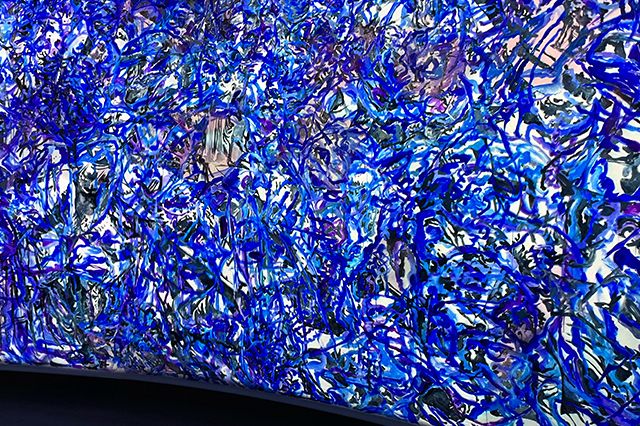
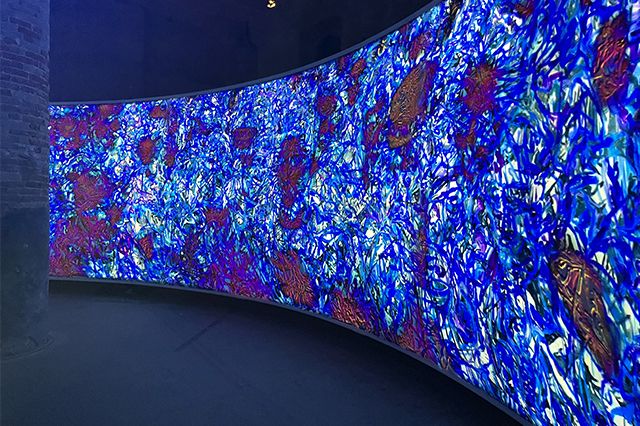
In an unprecedented move, artist Khaled Sabsabi participates not only in the Australian Pavilion Venice Biennale 2026 but also in the international exhibition. His work khalil - a monumental painting-and-video installation running approximately 64 minutes - is presented in a prominent position in the Arsenale, greeting visitors near the entrance. The companion project khalil is located at the Arsenale and functions as a more urgent, visceral counterpoint to the meditative pavilion piece, with abstraction layered over painterly washes, figurative elements and images of faces.
This dual participation is a historic first for an Australian artist. Where conference of one's self invites slow, interior reflection, khalil carries more tension and emotional charge - a section of Sabsabi's practice that engages more overtly with chaos, anguish and the liminal states that Kouoh's exhibition theme embraces.
The significance is clear: Australia is visible both through a dedicated national pavilion and through representation in the biennale's main exhibition, demonstrating the breadth and depth of Australian creative practice on the world stage. It positions an Australian perspective in dialogue with global narratives about borders, ideology and belonging, while also validating the decision to showcase Sabsabi's work despite the controversy that preceded it.
Creative Australia's Role and Visitor Information
Creative Australia commissions and produces the Australian Pavilion Venice Biennale 2026, managing every aspect of Australia's national participation at the Venice Biennale. This includes selecting the artist and curator, overseeing governance and approval processes, coordinating technical production, and running Venice programs that support artists, curators and early-career cultural workers.
Creative Australia also owns the Australian Pavilion Venice Biennale 2026 building itself, a platform that has served as a showcase for Australian art since 2015.
Beyond the exhibition
The organisation's Venice programs extend well beyond a single exhibition. They include professional development opportunities, fellowships and networking events designed to connect Australian practitioners to the international art community. These programs reflect a long-term investment in building the capacity of Australia's creative sector, ensuring that the benefits of Venice participation ripple outward across the country's arts ecosystem.
Visitor information
Here are the key details for anyone planning to visit:
- Exhibition: conference of one's self by Khaled Sabsabi
- Dates: 9 May – 22 November 2026
- Location: Australia Pavilion, Giardini della Biennale, Venice
- Hours: (May–Sep) Tuesday–Sunday, 11 AM – 7 PM - (Oct–Nov) Tuesday–Sunday, 10 AM – 6 PM
- Tickets: Standard Biennale Arte 2026 ticket
- Languages: On-site information in English and Italian
Visitors should anticipate heavier attendance during the Vernissage opening days and weekends. The immersive, darkened interior encourages slow-paced movement, so plan for at least an hour if you want to experience the full 54-minute audiovisual loop. The Arsenale section hosting khalil is accessible with the same biennale ticket but located in a separate venue.
Australia's regular participation in the Venice Biennale - represented consistently since 1954, with 26 editions by 2026 - is a key element of its cultural diplomacy. It enhances the international profile of Australian artists, strengthens long-term connections between Australian and global art communities, and ensures that stories from Australia continue to be present in the world's most important conversations about contemporary art.
FAQ
This section answers common questions about the Australian Pavilion Venice Biennale 2026 not fully covered above.
Who is Khaled Sabsabi, the artist representing Australia in 2026?
Khaled Sabsabi is a Lebanese-born, Western Sydney–based Australian artist known for video, sound, film and installation works that address migration, faith, community and ideology. Born in Tripoli in 1965, he migrated to Australia in 1976 and has maintained a longstanding engagement with communities in Australia and the Middle East. His multidisciplinary practice, deeply informed by Sufi spirituality and the experience of displacement, has been exhibited nationally and internationally since the late 1990s.
Where is the Australia Pavilion 2026 located at the Venice Biennale?
The Australia Pavilion 2026 stands in the Giardini della Biennale in Venice, among the permanent national pavilions built by various countries over the past century. Visitors can reach it via the main biennale entrances using a standard Biennale Arte 2026 ticket. The building, designed by Denton Corker Marshall, is recognisable by its distinctive black granite exterior and sits within walking distance of other major national pavilions in the gardens.
What are the dates for the Australian Pavilion Venice Biennale exhibition in 2026?
The Australian Pavilion's exhibition, featuring conference of one's self by Khaled Sabsabi, runs for the full duration of the 61st International Art Exhibition - from 9 May to 22 November 2026. Opening hours follow the official Venice Biennale schedule, shifting from summer to autumn timetables in October. The exhibition is open Tuesday through Sunday throughout this period.
What is the difference between the Australia Pavilion 2026 and the International Exhibition 'In Minor Keys'?
The Australia Pavilion 2026 is Australia's dedicated national presentation, housed in its own permanent building in the Giardini and featuring a single commissioned project by the selected artist. In Minor Keys is the central international exhibition of Biennale Arte 2026 - a large-scale, curated exhibition spanning the Arsenale and Central Pavilion, featuring artists from many countries under a unified thematic framework developed by the late Koyo Kouoh. In 2026, Khaled Sabsabi appears in both: with conference of one's self in the national pavilion and khalil in the international exhibition, giving Australia a rare dual presence that amplifies its visibility across the entire Biennale.
Australian Pavilion Venice Biennale 2026: conclusion
So, in conclusion, Australian artist Khaled Sabsabi leads the Australian Pavilion at the 61st International Art Exhibition – La Biennale di Venezia 2026, running from 9 May to 22 November 2026 in the biennale gardens of the Giardini.
The Australian Pavilion Venice Biennale 2026 hosts Sabsabi's immersive installation conference of one's self, commissioned and produced by Creative Australia and curated by Michael Dagostino.
In a historic first for Australia, Sabsabi also features in the Biennale's main exhibition In Minor Keys, curated in honour of the late Koyo Kouoh, with a companion work titled khalil at the Arsenale.
Follos us Venice Insider Guide!
- The photos in this article of the Australian Pavilion Biennale 2026 are the property of Venice Insider Guide.