
Hey travelers, looking for information about Summer in Venice, Italy? You're in right place.
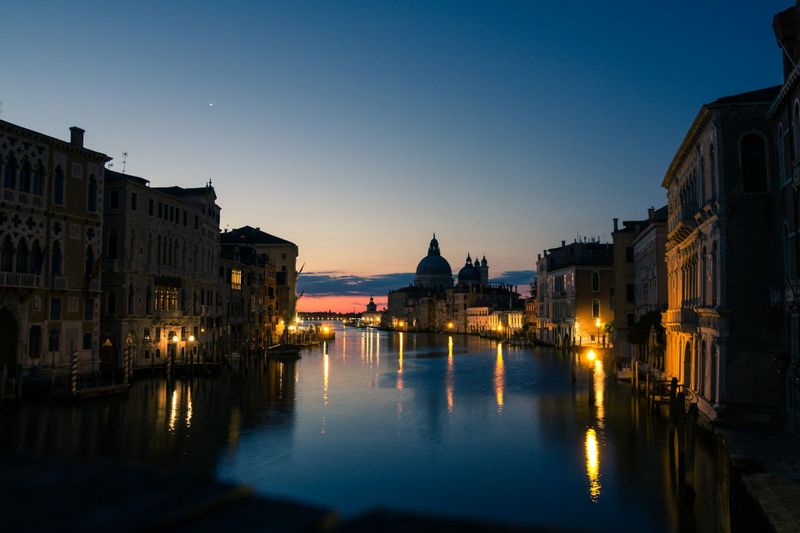
Picture a summer evening in Venice, let's say near the Rialto Bridge in June, July or August: golden light spills across the Grand Canal, vaporetto wakes lap against the ornate facades of the palazzos and church bells ring out across the lagoon. The air is warm and full of the scent of saltwater, the sound of hushed conversation drifting from the bacari that line the water. This is summer Venice at its most captivating.
So, if you're planning a trip to the lagoon city, summer is one of the most exciting times to discover all the charm of Venice in summer 2026.
Discover all the best bits of this stunning time of year in this guide about summer in Venice 2026 (from the Venice Insider Guide).
Summer in Venice 2026: The Lowdown
- Summer in Venice (June to August) is hot, crowded and comes with a hefty price tag, but the evenings, early mornings and after dark on the Grand Canal are simply magical - if you time your sightseeing with the heat, it makes all the difference.
- Must-see sights in the summer in Venice include St. Mark's Square and Basilica, the Doge's Palace, the Rialto Bridge and Rialto Market, plus some of the quieter sestieri like Dorsoduro and Cannaregio if you want to uncover some of the hidden gems beyond the main throng.
- There's a lot to get right if you want to enjoy summer in Venice, so make sure to book your main sights weeks in advance, stay overnight rather than trying to cram it all in during the day, and always, always check if your accommodation has aircon - it's not a guarantee in every Venetian building.
- Sometimes the best way to cool off in the summer is to get out of Venice altogether and head to the lagoon. Giudecca, Murano, Burano and even a day at the beach on the Lido are all great options for a welcome break from the heat and a chance to explore some of the surrounding islands.
What Does Summer in Venice Really Feel Like?
The good news is that the long days, lively atmosphere, warm nights and festivals like the Festa del Redentore - a major celebration with fireworks over the lagoon - make it a really special time to be in Venice. And, of course, it was here that opera was born back in 1637, so you can still feel the energy of live performance on summer evenings. But, on the other hand, the bad news is that summer in Venice is also hot, humid and crowded, and prices are notably higher for accommodation and food.
Peak tourist season is roughly from early June through to late August, with the absolute worst of the crowds and prices between mid July and August 20. Knowing how all this fits together is key to making the most of your summer Venice trip, so read on for more on the best bits, the worst and what to do about it all.
Summer Weather in Venice: The Forecast
Summer days in Venice usually get up to 25C to 31C (78F to 87F) and humidity can feel even higher because of the lagoon. Here's a rough idea of what to expect:
- June | 25°C (78°F) | 16°C (61°F) | 8-9 days | after 8:30pm
- July | 28°C (83°F) | 18°C (65°F) | 5 days | around 8:45pm
- August | 27°C (82°F) | 18°C (64°F) | 5-6 days | around 8:15pm
June is actually the mildest of the three summer months, with highs of 25C making it a good time to visit if you're not a fan of the heat. July is the hottest, with highs of 83F and loads of sunshine, but also the most crowded and expensive. August is similar to July but a bit cooler, with a few more chance of afternoon storms. And yes, it's hot in Venice in the summer, with humidity levels usually around 70-75% and not a lot of shade to be found.
You will get long days in the summer, with sunset not till after 8:30pm in June and a brief drop in temperature just before the storms roll in. There's not a lot of rain, either - around 5 days in July, so pack a compact umbrella but don't let that put you off.
The Verdict
- June: Warm but not oppressive. Fewer crowds than peak season. Occasional spring rain trails on.
- July: Maximum sunshine, warmest sea temperature, most festive. Also most crowded and expensive.
- August: Still hot, some locals take their holidays, some smaller shops close mid-month. Crowds remain heavy till mid-August.
Planning Your Venice Summer Trip: Timing, Budget and Day-Tripping
Working out the timing of your trip is key. Knowing when to go and when to avoid will help you make the most of your time in Venice. And don't forget to budget and sort out your day trips!
If you have some flexibility in your travel plans, try heading to Venice in early June or the last week of August - the weather and costs make a more balanced pairing.
Hotel price ranges in summer in Venice 2026:
- Budget (Mestre, outlying islands): €60-€150/night. For that, you get a decent room in a less central part of the city.
- 3-star (the historic heart of Venice): €180-€250/night. It's the sweet spot for most visitors, with a good balance of price and location.
- 4-star mid-luxury: €280-€400/night. This is where things get pricey but still relatively reasonable.
- Luxury Grand Canal palaces: €600-€2,000+/night. For the truly monied, these stunning old palaces come at a eye-watering price.
Booking 3-4 months ahead of your trip can save you a very attractive 20-40% compared to booking at the last minute when prices are at their highest.
Venice Access Fee (2026): On 60 specific dates between April 3 and July 26, people aged 14 and over who are visiting Venice's famous historic centre have to pay a fee: €5 a head if you book in advance, or €10 if you leave it to the last minute. If you're staying the night in Venice, you're exempt - that fee will have already been taken care of in the cost of your accommodation, which typically runs from €3.50 to €5 a night for mid-to-upmarket hotels.
Unless you are an absolute die hard, you really don't want to visit Venice on a day trip during the summer - the queues are ridiculously long, the sun is blazing and the last thing you need is to be in a hurry.
St. Marco: St Mark's Square, Basilica and Doge's Palace in Summer
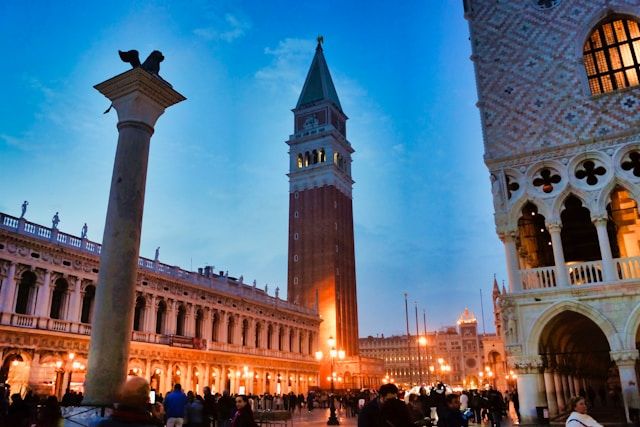
St. Mark's Square is a bit of a study in contrasts in the summer in Venice. Early morning is a peaceful time, with the sound of pigeons and the sun shining down on the arcades. But by 11 am, the cruise ship passengers start to arrive and the square is suddenly very busy, with café orchestras competing for attention - not to mention the crowds. But after 9 pm, the square empties out and for a brief time you can see it in all its peaceful glory.
St. Mark's Basilica is something that has to be seen - it was built back in the 9th century as a shrine to St. Mark's relics and its Byzantine architecture is unlike anything else you'll see in Italy. If you're planning to visit in the summer in Venice, here's a few top tips:
- Do book in advance - even a timed entry slot will help you avoid waiting in line for 90 minutes or more.
- Do make sure you dress decently - the basilica enforces a no shoulders, no knees rule.
- And if you really can't abide the crowds, look for an evening or after-hours slot when it's a bit calmer.
The Doges Palace, meanwhile, is a great place to get a behind-the-scenes look at Venice's history - and the best part is it's relatively line-free if you book a guided tour. Just be aware that the aircon is a bit hit-and-miss, and the best time to visit is early morning or late afternoon when it's a bit cooler.
The Campanile, meanwhile, stays open a bit later in the summer in Venice, with last entry around 8.30 pm. And the views from the top are just stunning - you can see the lagoon stretching out in front of you, as well as the distant Alps on a clear day. Of course, the top is fully exposed, so don't forget your sunscreen and a hat.
If you're looking to splash out on a famous-expensive cappuccino, Florian on St. Mark's Square is the place to go - it's been serving since 1720, and the setting and the music are just part of the experience. And that's because Venice was once a vast and powerful maritime empire, with this very square at its ceremonial heart.
How to navigate St. Mark's Square in the peak season
- Avoid the crowds totally by arriving before 8 am or after 8.30 pm.
- Try to get into the square through one of the side streets from the Castello district or via the Mercerie from Rialto - it's always a lot less crowded than the waterfront entrance.
- If you need a break from the heat, pop into one of the arcades (Procuratie) for some shade - or duck into a nearby museum like the Correr Museum for some indoor aircon.
- And if you want to make the most of your time on St. Mark's, try to combine your visits to the Basilica, the Doges Palace and the Campanile in a logical order, like this: Basilica early morning, Doges Palace mid-morning, lunch break, then a leisurely vaporetto trip along the Grand Canal in the late afternoon.
Along the Grand Canal: Vaporetto Routes, Views and Summer Sunsets
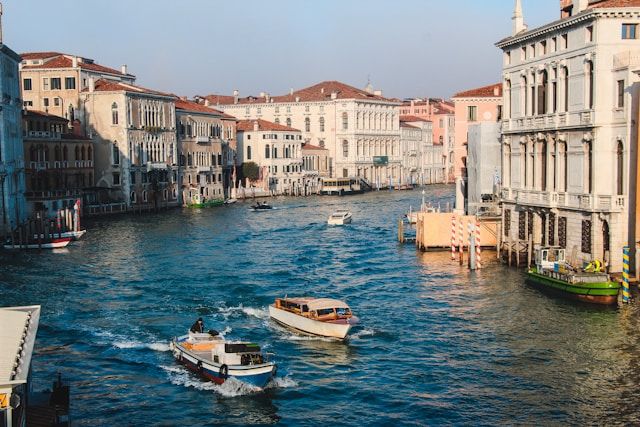
The Grand Canal is the main thoroughfare of Venice - and it's a stunning sight, with centuries of stunning palazzo facades and ornate bridges. If you want to enjoy it in summer in Venice, early morning and sunset are the best times - when the light is soft and the temperature has dropped a bit.
Getting round Venice is relatively easy, and one of the best ways is by vaporetto (water bus). Line 1 goes all the way from Piazzale Roma to San Marco, giving you the full slow tour. Line 2 is a bit faster and skips some stops, but both go under the Rialto Bridge and the Accademia Bridge, two of the best viewpoints on the canal.
Venice itself has a staggering 400 bridges, but the Grand Canal has only four road-crossing bridges - and each one is worth seeing: the Rialto for the bustling market, the Accademia for the wide sweep towards the Salute church, the Scalzi near the train station, and the Calatrava Bridge near Piazzale Roma.For photography, shoot in the hour after sunrise or the hour before sunset to avoid that harsh glare on the water - midday on bridges is a squint-fest with washed-out photos all round.
If you do end up on the bridges in the middle of the day, be prepared for the crowds and a lot of squinting. And then there's the cost - water taxis will give you a private transfer but it comes at a pretty steep price - for most visitors, vaporettis are going to be a lot more practical.
Rialto Bridge and Rialto Market - Perfect Morning on the Water
The best summer morning in Venice starts at Rialto market around 7:30 a.m. This is the time to get up close and personal with fresh seafood and produce. You can get your hands on some seriously impressive looking branzino, clams and mountains of tomatoes that are just begging to be eaten. The smell of all that fresh fruit and fish is just incredible - like permeating perfume. You'll be rubbing shoulders with the local fishmongers and regulars who know what's going on, while the tour groups are still stuck eating their hotel breakfasts.
By 9 a.m. the market will be bustling, so try to get to the bridge before 8:30 a.m. if you want some relatively uncrowded views of the canal. If you time it just right you can slip into the side alleys on the San Polo side of the bridge, where you'll find some quieter vantage points over the water.
Sample Rialto Summer Morning
- 7:30 am: Wander around the Rialto market stalls, pick up some fresh fruit for later and maybe even grab a snack to take with you.
- 8:15 am: Cross over the Rialto bridge for some great photo ops in the soft morning light.
- 8:45 am: Grab a sneaky espresso at a shaded bar on the San Marco side - it's the perfect way to start the day.
- And then when the afternoon comes around, catch the light as it turns golden with a late afternoon Aperol Spritz on a canal side terrace.
Beyond the Crowds: Dorsoduro, Cannaregio, and the Few Quieter Sestieri
Venice has six central sestieri, but for the most part you can forget San Marco and San Polo - they're the ones that get the most crowded. Dorsoduro, Cannaregio and bits of Castello are a whole different story. These are the places where the Venetians go for a quieter summer experience.
Dorsoduro
Dorsoduro is where you'll find the likes of the Peggy Guggenheim Collection and the Gallerie dell'Accademia - top-notch art collections in some pretty cool indoor spaces. If you're lucky enough to be visiting when the Venice Biennale is on, this is a real bonus. The Biennale, by the way, has been showcasing cutting edge art since 1895 - if your visit happens to coincide with it, that's enough to make it worth staying a few extra days.
Cannaregio
Cannaregio is the most residential sestiere in Venice - a wide main street runs from the train station to Rialto, but get off the main drag and you'll find some tiny bacari where the locals go to grab a cicchetti and a glass of house wine with the friends. And when the sun goes down, you can grab a candlelit table along the canal and enjoy some genuinely relaxed evenings. No orchestras, no surcharges - just the sound of the water and the occasional cargo boat chugging by.
Try and set aside a whole evening to explore these neighborhoods - the city takes on a whole different look after 7 pm, when all the day trippers have headed home
Hidden Gems and Cool Escapes in High Summer in Venice Italy
- San Giorgio Maggiore bell tower - actually worth a visit because the queues are generally shorter, and you get some great views with a nice breeze off the lagoon (it's a whole lot better than St Marks Campanile, if you ask me).
- Chiesa di San Zaccaria - this one's got some great Byzantine and Gothic art hidden away in a quiet, dimly lit interior, right in the heart of San Marco.
- Shaded cloisters at San Francesco della Vigna (in Castello) - this is one of the places you can actually get some peace and quiet, even in the heat of August.
- Acqua Alta bookstore (in San Marco) - a quirky little place where they sell books in gondolas and bathtubs - a great place to escape the heat and grab a cool photo op.
- Quiet campi in Castello - there are a few of these which are actually really nice, with benches, shade trees and local cafes to grab a drink at. Campo Santa Maria Formosa and Campo SS. Giovanni e Paolo are two of the best.
Island Escapes: Giudecca, Murano, Burano, and the Lido
In the summer in Venice, you can make use of the vaporetto system to get to the lagoon islands where the breeze is blowing and the crowds are decidedly thinner.
Giudecca
Giudecca is where the locals go to get a break from the crowds - it's got some fantastic sunsets over San Marco, and accommodation options too if you want to stay the night. If you're looking for a break from the noise of the main island, Giudecca might be the place to do it.
Murano
Murano is famous for its glassblowing studios, where you can watch artisans create beautiful glass objects using techniques that have been unchanged for centuries. And then there's Burano, with its bright colours and amazing lace-making traditions - one of the most photogenic places in the whole region.
Torcello
Torcello - the oldest settled island in the lagoon - has a really quiet church with some amazing Byzantine mosaics and almost no crowds. And if you're in the area, San Giorgio Maggiore is worth a visit too - it's only a 5 minute vaporetto ride from San Marco, and the combination of Palladio's architecture and panoramic views is pretty unbeatable.
Try and plan your island trips for the mornings and be back on the main island by the afternoon when the city cools down a bit.
A Beach Day on the Lido
The Lido is Venice's beach island - it's a 15-20 minute vaporetto ride from San Marco on Line 1 or 5.1. It's the perfect place to spend a hot summer day.
- Getting there: A vaporetto from San Zaccaria or any of the San Marco stops will get you there in no time. During summer in Venice, the frequency of these vaporettos is pretty regular.
- Beach options: If you're looking to spend some time soaking up the sun on a beach, private beach clubs are the way to go. You can rent cabanas, sunbeds, and even showers there - all for anywhere from €15 to €40 a day. Alternatively, there are a couple of free public beaches at the island's northern and southern ends.
- Sea temperature: By July and August, the sea is a lovely 25.4°C (77.7°F) - warm enough to get in and enjoy a proper swim.
- What to bring: Don't forget the essentials: sunscreen, towel, water shoes, a refillable water bottle, and something to read.
- Combo plan: Try combining a day of sightseeing in the central bit of Venice with a visit to the Lido for a late afternoon swim and a pretty sunset on the sand.
Events in summer in Venice (2026)
Among the most eagerly awaited events of Venice in Summer 2026 is undoubtedly the Festa del Redentore, one of the celebrations most dear to Venetians. But let’s not forget the Biennale, which alternates between Art and Architecture depending on the year. For example, the Venice Art Biennale will take place in Venice in the summer of 2026.
Festa del Redentore 2026
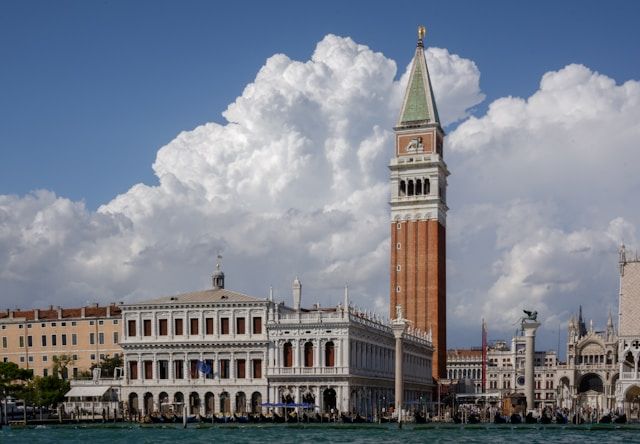
Every year in July, St. Mark’s Basin is transformed into a spectacular scene thanks to thousands of decorated boats and an extraordinary fireworks display that lights up the sky over the lagoon. It’s an event that combines history, tradition, and conviviality, offering visitors an authentic experience.
Biennale Arte 2026
The Venice Art Biennale will take place this summer in Venice in 2026.
The Art and Architecture Biennales are undoubtedly among the must-see events in Venice during the summer. The exhibitions feature artists from around the world and showcase installations, projects, and experimental works that attract culture enthusiasts and curious visitors alike. It’s the perfect opportunity to experience the city from an artistic perspective as well.
Venice Film Festival 2026
Toward the end of summer, the spotlight shifts to the Venice International Film Festival, the famous event that draws actors, directors, and international celebrities to the Lido of Venice. Even without attending the screenings, soaking up the red-carpet atmosphere and watching the stars arrive makes your stay even more special.
Concerts and Performances 2026
Throughout the summer season, Venice also hosts outdoor concerts, music festivals, performances in the city’s squares, and numerous cultural events spread across the historic center and the islands of the lagoon. As you stroll through the streets, it’s easy to stumble upon events that enrich your visit and allow you to experience the city from a different perspective.
The concerts in Venice for the summer of 2026 are:
- Riccardo Cocciante
- Andrea Bocelli
- The La Fenice Theater Orchestra and Chorus
- Edoardo Bennato
Staying Overnight in Venice: How to Survive the Summer Heat
Staying over in Venice is a totally different ball game when it comes to the summer experience. Not only do you get to see the city at dawn - with the canals looking all peaceful and serene - but you can also take a leisurely stroll through the empty streets at night without the crowds.
Staying overnight really is a no-brainer - it's the single best thing you can do for your trip. Trust us on that one.
Where to stay:
- In the historic center (San Marco, San Polo, Dorsoduro, Cannaregio): For maximum atmosphere, you can't go wrong here - just be prepared for higher prices.
- Giudecca: This is a waterfront area with some amazing sunset views - plus it's a bit lower key and a bit more affordable.
- Mestre: If you're on a tight budget then Mestre is the place for you - it's a bit out on the mainland but at least you've got access to some decent convenience.
You're going to need to book some small guesthouses or apartments nice and early though - especially if you're planning to be in Venice in late July or early August. The Festa del Redentore (third weekend in July) and Ferragosto (August 15) are both super popular times to visit.
Why Air Con is a Must-Have in the Summer in Venice
The thing is, air con is a real rarity in the historic buildings of Venice - and it's not hard to see why. Medieval design wasn't actually too concerned with modern comforts like a cool spot to sleep. Come July and August, sleeping without air con can be just plain miserable.
- Always check if the accommodation you book has air con - it's not just a nice-to-have, it's a must-have. Make sure it says "aria condizionata" in the listing - it's the Italian term for air con, and you should definitely be on the lookout for it.
- Rooms that are sealed and cooled are also going to keep those pesky summer mosquitoes out - and that's a real bonus.
- If you're really on a tight budget then you might have to give up on a super-central location - but trust us, a well-cooled room in Cannaregio is going to be a way better bet than a sweltering attic in San Marco.
Summer in Venice Itineraries 2026: How to Make the Most of the Long Days
The key to beating the heat is to plan your sightseeing for the cooler hours of the day - that's the mornings and the evenings, basically. The middle of the day (1:00-4:00 p.m.) is when you should be looking for a cool, quiet spot to have a rest - that could be a museum, a long lunch, or even a snooze.
A suggested 3-day summer in Venice itinerary:
- Time block
- Day 1
- Day 2
- Day 3
- Morning (7–12)
- San Marco: the Basilica, the Palace, the Campanile
- Rialto Market, Grand Canal vaporetto
- Murano + Burano islands
- Afternoon (1–4)
- Lunch + museum (Correr or Accademia)
- Rest / Lido beach swim
- Lunch in Cannaregio + rest
- Evening (5–10)
- Dorsoduro stroll, Zattere sunset
- Gondola ride + cicchetti in Castello
- Giudecca sunset + farewell dinner
Our Top Tips for Sightseeing in the Heat
- Get out and about by 7:00-8:00 am. The canals are deserted, the light is gorgeous, and it's a good 10°C cooler than midday. This is actually what photographers love about this city - and it's easy to see why.
- Take a break between 1:00-4:00 p.m. Grab a coffee, head to a museum, or just take it easy in a cool spot. Don't worry - you're not being lazy, you're just doing what the locals do to beat the heat.
- Nightfall brings a new kind of magic to the city. Get back out and about after 5:00 p.m. for a stroll along the Riva degli Schiavoni, a cicchetti crawl in Cannaregio, or a gondola ride through the quiet Dorsoduro canals. Bonus tip: if you book a gondola ride from one of the quieter areas of the city, you might avoid the crowds.
Food and Drink in the Venetian Summer
Venice has loads of restaurants, bars and cafes - and the eating options will vary depending on which part of the city you're in. When it comes to summer eating in Venice, the rule of thumb is to stick to light, refreshing meals - grilled fish, seafood risotto, and the iconic sardele in saor (a.k.a. sweet and sour sardines).
But there's a whole world of cicchetti to discover too - these are the traditional Venetian small snacks that you'll find in local taverns. Think of them as Venetian tapas. Take a cicchetti crawl through Cannaregio or the streets behind Rialto and you'll be making some amazing discoveries - and eating some amazing food to boot.
Timing tips:
- Grab lunch around 12:30-1:00 p.m. before the crowds start to arrive.
- Dinner after 8:00 p.m. when the temperature drops and the waterfront restaurants get really pleasant.
- Sitting all day on the grand canal terraces - where the tourists are and the sun is - comes with a price tag. Better deals can often be found on the shaded side streets a block inland - and the food's quite often a cut above too.
Staying Hydrated and Cool In Venice: Finding the Right Fountains and Snacks
- You'll find public fountains - the 'nasoni' - all over Venice and they provide a free, safe drink. Look for those little green metal spouts in the campi and along the main pedestrian routes.
- Don't forget to carry a refillable water bottle and top it up as you go. Dehydration sneaks up on you quick in this heat and humidity, especially when you're on the move all the time.
- If you're after a quick pick me up, try grabbing some fresh fruit from the Rialto market, a granita from a local gelateria or a gelato from a shop just off the main drag - the quality's better and the prices aren't so bad either.
Practical Tips for Surviving Summer in Venice 2026: Clothing, and Crowds
- Clothing : Wear light, loose-fitting clothes (linen and cotton are good choices) , and don't forget a hat and some sunnies - you don't want to get caught out in this sun. Also, pack shoes that can handle all the bridges and uneven paving - 400 of them, to be exact!
- Crowds : Try to book popular attractions in advance to avoid the chaos. Cut down on luggage by packing lightly and use some of the quieter routes between San Marco and Rialto - your hotel will be able to tell you some local shortcuts.
- Storms : We get a lot of quick thunderstorms in the summer - so carry a compact umbrella or a light rain jacket - they won't last long and they'll make things a bit more bearable.
Booking Smart: Timing Your Visits, Tours and Gondolas
- Get yourself a timed entry ticket for St Mark's Basilica, the Doge's Palace and popular guided tours, especially from late June to mid-August. If you can book a couple of weeks in advance, you'll be safe as houses in peak season.
- If you're prepared to pay a bit more, consider an after-hours or small-group tour - it's going to be a lot quieter and you might even get a better experience inside some of those major monuments.
- Try boarding a gondola from Dorsoduro, Castello or Cannaregio instead of straight from St Mark's Square or Rialto Bridge - you'll get a more peaceful ride through the canals.
- Check out the cancellation policies - sometimes storms can cancel outdoor activities.
Being a Responsible Tourist in Venice in Summer 2026
When we get a lot of tourists in the summer - which we do - it puts a lot of pressure on the city's residents, infrastructure and lagoon environment. It's worth being mindful of that, so here are a few tips for being a responsible tourist.
- Stay over instead of day-tripping - you'll contribute more to the local economy and it'll help ease the pressure on the city during peak hours.
- Try and support some of the smaller neighbourhood businesses - the shops and restaurants in the sestieri beyond San Marco and Rialto.
- Respect the local rules: swimming in canals is illegal and you're putting yourself at risk, picnicking on church steps is a no-go, and don't even think about blocking narrow passageways - it really messes with the locals trying to get on with their day.
- Try to spread your visits out a bit, visit different parts of the city and islands and avoid putting too much pressure on the central areas during peak hours - it makes a world of difference.
Venice isn't a museum or some made-up theme park - its actually a living breathing city with 50,000 actual residents who share their home with a staggering 30 million visitors every year. An italian adventure here is all about appreciating the tension between the two and deciding to be a part of the solution. This is a trip you should definitely be taking some thought into - whether its a summer holiday, an art or history trip, or a tour from rome, florence, or anywhere else in europe, make it more than just a pretty backdrop. Let it be an experience that'll stay with you.
Tips on What to Wear in Venice in Summer 2026
Visiting Venice in the summer means dealing with high temperatures and often high humidity. For this reason, it’s advisable to wear lightweight clothing made of linen or cotton - materials that allow the skin to breathe and ensure greater comfort during walks.
Shoes deserve special attention. Venice is a city best explored on foot, and with its bridges, cobblestone streets, and long distances, it’s essential to choose comfortable, well-cushioned footwear. Bringing a reusable water bottle is a great idea, especially given the numerous public drinking fountains throughout the city.
To protect yourself from the summer sun, a hat, sunglasses, and high-SPF sunscreen are essential. In the evening, especially along the lagoon or during a vaporetto ride, a light shirt or a thin jacket can come in handy to ward off any breezes.
FAQ: Summer in Venice 2026
Will Venice be too hot for me to visit in July or August?
Its going to get really hot and humid in July and early August - especially during the middle of the day when the summer heat mixes with the lagoon humidity. But there are ways to stay cool - the early morning and evenings are nice and pleasant, and if you plan your day around the heat, you'll manage just fine. Some visitors even consider July and August to be the perfect time for an evening dinner, festival or a romantic sunset walk that you just cant do in cooler months.
How many days do I need in Venice in the summer?
You'd need 2 full days to see the main sights like St Marks, the Rialto bridge, and a grand canal ride. 3 - 4 days gives you time to explore some of the quieter neighborhoods, some of the islands, and a few slower-paced evenings. If you only have a day trip here, itll feel rushed because of the queues and heat, so doing an overnight stay is a must if you want to experience the city at its best.
Can I swim in the canals to cool off?
No way - its not allowed and not just for the fines you'll get - its also super unsanitary. And you'll be putting yourself in danger because of all the boat traffic. But you can swim at the Adriatic beaches on the Lido or check out some of the other approved spots in the Veneto region. The water temperature is nice and warm in the summer - around 25°c.
Is Venice safe to walk around at night in summer?
Venice is pretty safe at night - even in the height of the season. Central areas stay nice and busy even well past midnight - and the city has very low rates of violent crime. Just be a normal human - watch out for pickpockets in crowded areas, be careful with your valuables, and dont stray too far from the main paths if you're walking back to your accommodation at night. The best thing is that the city is really compact so you're never too far from some populated areas.
Do I need to speak Italian to visit Venice in the summer?
Some people in the main tourist areas speak a bit of English, and you can muddle through without speaking Italian but... learning a few basic phrases will go a long way - especially in local markets, little cafes and the neighborhood shops outside of the main tourist zones. If you learn some basic greetings, use some polite words like "per favore" and "grazie", and can ask for a glass of cold water or check the opening hours, youll see a whole different side of Venice. Whether you're a language student, a traveller from Greece or Spain, or just someone who wants to get a bit more out of their travels, a few words of Italian can really open doors - and get you noticed by the locals in a good way.
Conclusion
Summer in Venice 2026 is one of the best times to let yourself be captivated by the lively spirit of the Serenissima.
With international events, historic celebrations, evenings spent overlooking the canals, and views that change color at sunset, every day offers a different opportunity to create unforgettable memories.
If Venice is on your list of upcoming destinations, summer will treat you to an experience rich in emotions, culture, and sights that will stay with you forever.
And even just a few words of Italian can go a long way - especially in local markets, bacari and neighbourhood shops beyond San Marco. You don't need to be fluent - just showing an effort to communicate can earn you a lot of goodwill.
So, this are the essential italian phrases for summer visitors:
- "Acqua fredda, per favore" - That's cold water, please - and essential when you're in a restaurant or bar.
- "C'è aria condizionata?" - Is there air conditioning? (a good one to know when you're booking your accommodation)
- "A che ora chiudono?" - What time do you close? (useful for museums and shops)
- "Un spritz, per favore" - A spritz, please - the ultimate summer order.
- "Dov'è l'ombra?" - Where is the shade? (a genuinely useful one)
- "Grazie mille" - That's thank you very much
- "Per favore" - Please - it's one you'll be using a lot - use it all the time, and the locals will appreciate it.
Keep following us for similar content on Venice Insider Guide.